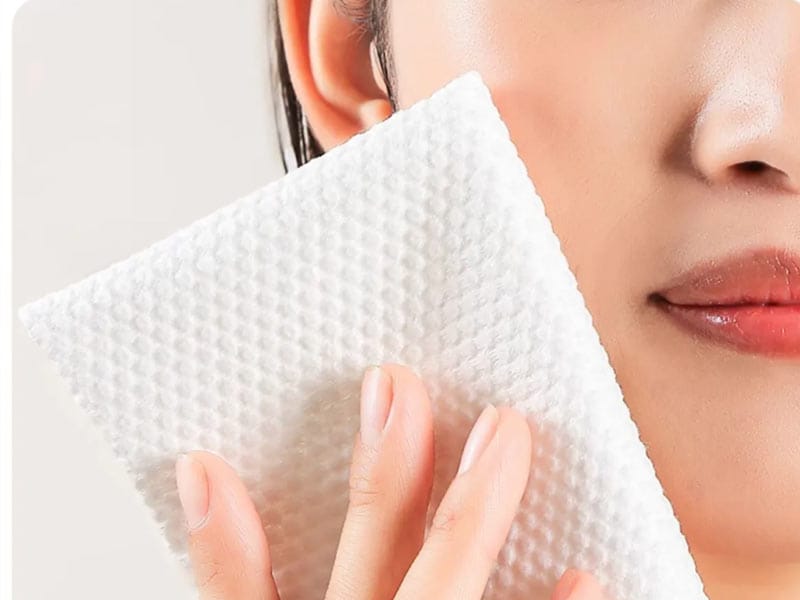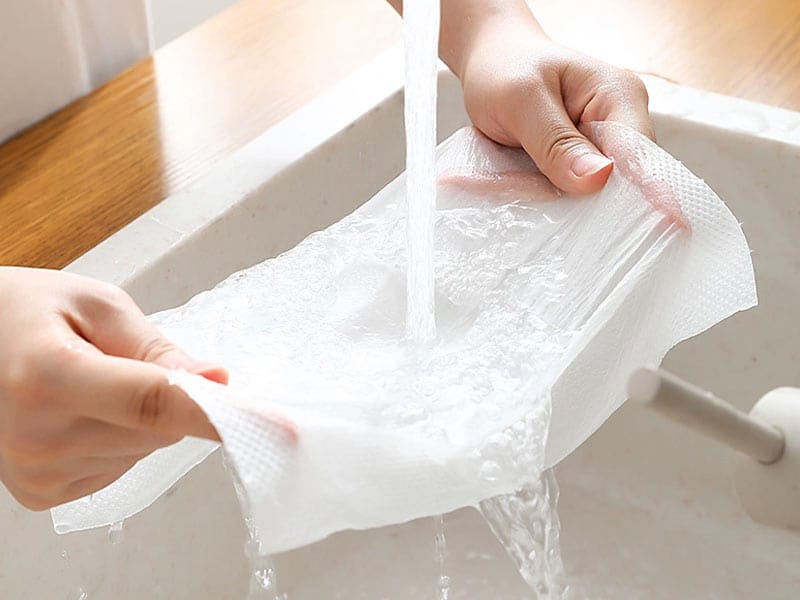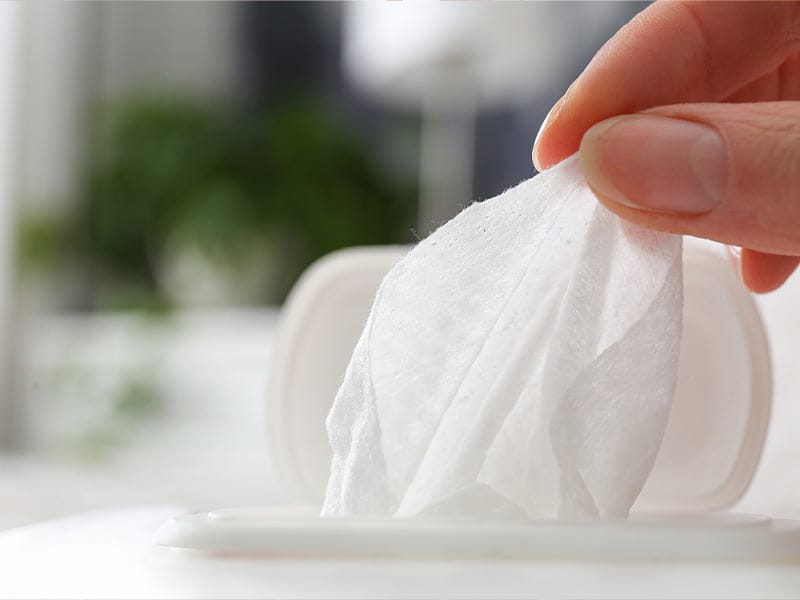
Wet wipes packaging does more than display a brand name. It helps maintain moisture, supports convenient dispensing, protects the product during transportation, and influences how customers perceive quality.
For private label brands, distributors, retailers, and institutional buyers, selecting the right package is therefore an important part of product development. A small travel pack has different requirements from a family-size baby wipes pouch, while household cleaning wipes may need a package that provides stronger sealing and repeated-use convenience.
This guide compares the most common wet wipes packaging types and explains how to choose a suitable format based on product application, sales channel, sheet count, moisture level, branding, and transportation requirements.
Brands still deciding on the base material can first read our guide to spunlace nonwoven fabric for wet wipes.
Table of Contents
Why Wet Wipes Packaging Matters
Wet wipes are stored in a moist condition. The package must help limit evaporation and protect the sheets from contamination during normal handling.
A suitable packaging system should support:
- Moisture retention
- Smooth one-sheet dispensing
- Reliable opening and closing
- Resistance to leakage
- Protection during transportation
- Clear product labeling
- Convenient consumer use
- Consistent shelf presentation
Packaging also affects production cost, carton dimensions, shipping weight, minimum order requirements, and artwork preparation.
The best package is not necessarily the most expensive option. It is the format that matches the product’s intended use, selling environment, and customer expectations.
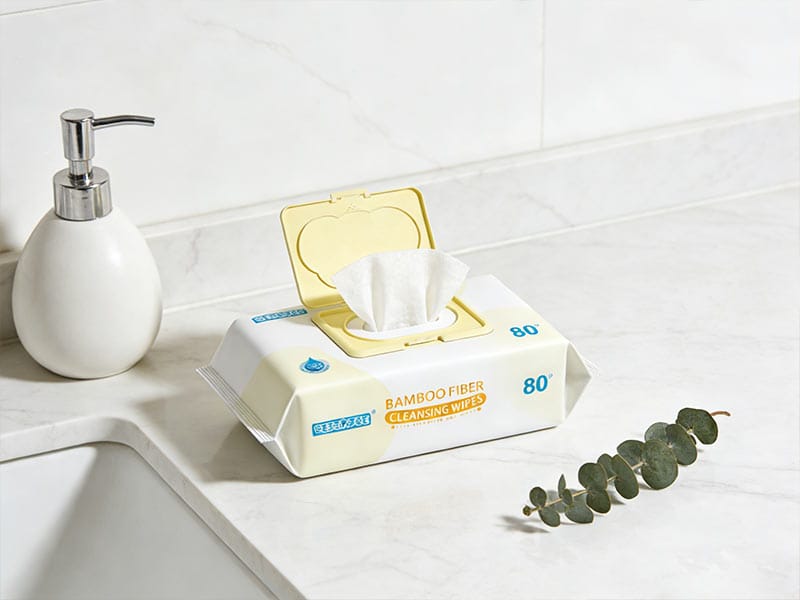
Main Wet Wipes Packaging Types
Private label wet wipes can be packed in several formats. Each option has different advantages and limitations.
Soft Pack Wet Wipes
A soft pack is one of the most common wet wipes packaging formats. It usually consists of flexible printed film with a resealable label or plastic flip-top lid.
Soft packs can be used for:
- Baby wipes
- Facial cleansing wipes
- Feminine hygiene wipes
- Adult cleansing wipes
- Household cleaning wipes
- Travel wipes
- General personal care wipes
Advantages of Soft Packs
Soft packs are popular because they can provide:
- Relatively low packaging weight
- Flexible sheet counts
- Large printable branding areas
- Convenient retail display
- Lower storage volume than rigid containers
- Compatibility with different wipe sizes
They can be designed for small, medium, and family-size packs.
Points to Check
When evaluating soft pack samples, buyers should check:
- Film thickness
- Seal strength
- Opening size
- Label adhesion
- Lid attachment
- Dispensing performance
- Resistance to leakage
- Moisture retention after repeated use
A soft pack may look attractive but still perform poorly if the label lifts, the lid detaches, or several sheets come out together.
Resealable Label Packs
A resealable label pack uses an adhesive label over the dispensing opening. The user lifts the label, removes a wipe, and presses the label back into place.
This format is often selected for:
- Travel packs
- Promotional packs
- Small personal care packs
- Economical retail products
- Low or medium sheet counts
Benefits
Resealable label packs generally use less rigid plastic than flip-top packs and can be lightweight and compact.
They may also require less packaging space during transportation.
Limitations
The label must maintain adhesion after repeated opening. Formula residue, dust, moisture, and improper storage can reduce resealing performance.
For this reason, buyers should perform repeated-use testing rather than checking the package only once.
A useful test is to open and reseal the pack several times over multiple days while monitoring:
- Label adhesion
- Wipe moisture
- Opening cleanliness
- Package deformation
- Ease of dispensing
Flip-Top Wet Wipes Packs
A flip-top pack combines a flexible pouch with a rigid plastic lid.
The lid usually provides stronger repeated-use convenience than a simple resealable label and is commonly used for:
- Baby wipes
- Family-size wipes
- Adult care wipes
- Household cleaning wipes
- Premium personal care wipes
Advantages of Flip-Top Packs
A plastic lid can provide:
- Convenient one-handed opening
- More reliable repeated closing
- Improved protection of the dispensing area
- Stronger premium appearance
- Better usability for high sheet counts
This format is particularly useful when the package will be opened many times.
Factors Affecting Cost
Flip-top packaging may cost more than label-only packaging because it includes an additional rigid component and assembly process.
Cost may vary according to:
- Lid size
- Lid color
- Lid shape
- Customized mold requirements
- Attachment method
- Order quantity
- Printed film specification
OEM buyers should confirm whether the lid is a standard factory option or requires custom tooling.
Wet Wipes Canister Packaging
Canister packaging usually consists of a rigid plastic container with a dispensing lid. The wipes may be folded or supplied in a center-pull roll.
Canisters are commonly used for:
- Household cleaning wipes
- Disinfecting wipes
- Fitness equipment wipes
- Automotive wipes
- Institutional cleaning products
- Industrial wiping applications
Advantages of Canisters
Canisters may provide:
- Strong package structure
- Convenient countertop placement
- Large product capacity
- Good protection during repeated use
- Compatibility with roll-format wipes
- Clear differentiation from personal care pouches
For surface hygiene applications, buyers can review Beierjie’s customizable disinfecting wipes.
Important Testing Areas
Canister packaging should be evaluated for:
- Lid sealing
- Roll dispensing
- Perforation quality
- Formula distribution
- Container deformation
- Leakage during transportation
- Top-sheet drying
- Bottom-of-container liquid accumulation
The first wipe and last wipe should both dispense and perform consistently.
Individual Wet Wipes Sachets
Individually wrapped wipes are sealed one sheet per sachet.
They are commonly used for:
- Restaurants
- Airlines
- Hotels
- Hospitals and clinics
- Events
- Travel kits
- Promotional samples
- Beauty and personal care products
Advantages of Individual Sachets
Individual packaging can offer:
- Convenient single use
- Easy distribution
- Compact storage
- Controlled sheet quantity
- Strong branding opportunities
- Reduced exposure before use
Each sachet can carry product information, instructions, branding, and batch coding.
Considerations for OEM Buyers
Individual sachets use more packaging per wipe than multi-sheet pouches. Buyers should evaluate both unit cost and intended distribution channel.
Important specifications include:
- Sachet dimensions
- Film structure
- Sealing width
- Tear notch
- Printing area
- Wipe folding
- Liquid dosage
- Carton quantity
Sachets intended for hospitality or food-service environments may need different wording and packaging dimensions from cosmetic cleansing wipes.
Flow Packs and Travel Packs
Small flow packs usually contain several folded wipes and are designed for portable use.
They may be suitable for:
- Hand and face wipes
- Travel wipes
- Feminine wipes
- Baby wipes
- Gym wipes
- Outdoor activity packs
Travel packaging should be compact without making the wipes too small for practical use.
Buyers should balance:
- Sheet dimensions
- Number of wipes
- Package thickness
- Moisture loading
- Opening convenience
- Resealing performance
The final package should fit the intended bag, pocket, amenity kit, or retail display.
Refill Packs
Refill packs are flexible pouches designed to replenish a reusable container or dispenser.
They may be used for:
- Household cleaning wipes
- Institutional wipes
- Personal care products
- High-volume applications
- Consumer refill programs
Refill packs can reduce the need for a new rigid container with every purchase, but environmental claims should still be made carefully.
Statements such as “eco-friendly,” “sustainable,” or “reduced plastic” should be supported by specific packaging comparisons and applicable evidence rather than broad assumptions.
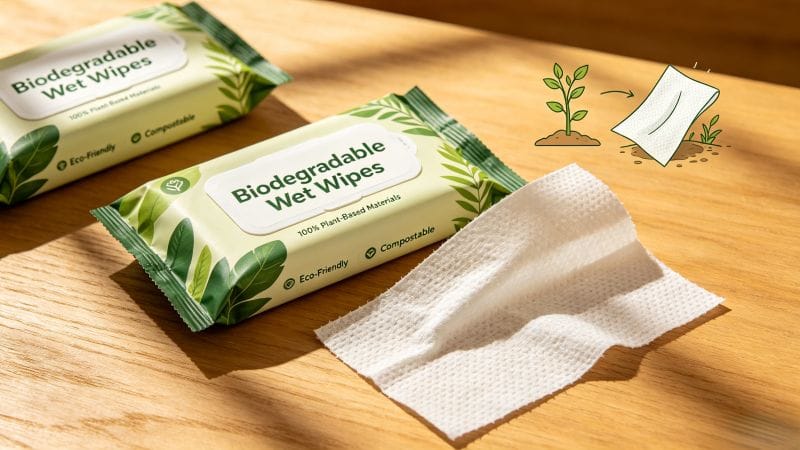
Boxed Wet Wipes
Some wipes use an outer paperboard box with individually wrapped sachets or an internal flexible package.
Boxed packaging can support:
- Premium shelf presentation
- Gift sets
- Medical or professional presentation
- Individually wrapped wipe collections
- Product kits
- E-commerce protection
The outer box provides additional space for product information, instructions, multilingual labeling, and brand design.
However, it also increases packaging material, carton volume, and assembly requirements.
Hanging Packs
Hanging wet wipes packaging includes a hole or handle area that allows the pack to be displayed from a hook.
It may be suitable for:
- Retail convenience stores
- Automotive wipes
- Travel wipes
- Outdoor wipes
- Household cleaning wipes
- Promotional products
The hanging section must be strong enough to support the package throughout storage, transportation, and retail display.
How to Match Packaging to the Wet Wipe Application
Different product categories create different packaging priorities.
Baby Wipes Packaging
Baby wipes are often used repeatedly throughout the day. Packaging should support fast opening, smooth dispensing, and reliable closing.
Common options include:
- Flip-top pouches
- Large soft packs
- Travel packs
- Refill packs
Buyers developing infant-care products can review our customizable baby cleansing wipes.
Important factors include:
- One-handed use
- High sheet count
- Moisture retention
- Stable lid attachment
- Easy access during diaper changes
- Resistance to leakage in diaper bags
Facial Cleansing Wipes Packaging
Facial cleansing wipes may be sold through beauty stores, pharmacies, supermarkets, hospitality suppliers, or online channels.
Packaging priorities often include:
- Clean visual presentation
- Compact dimensions
- Reliable resealing
- Controlled sheet dispensing
- Space for ingredients and instructions
- Compatibility with cosmetic branding
See our facial cleansing wipes for available OEM material, formula, sheet-size, and package options.
Feminine Hygiene Wipes Packaging
Feminine wipes often require discreet and portable packaging.
Common choices include:
- Individual sachets
- Small travel packs
- Compact resealable pouches
- Boxed sachets
Packaging should be easy to carry, open, and dispose of while providing enough space for accurate product information.
Household Cleaning Wipes Packaging
Cleaning wipes generally require stronger packages because they may contain more sheets, larger sheet sizes, or formulas that must remain stable during repeated use.
Common packaging options include:
- Canisters
- Flip-top soft packs
- Refill pouches
- Large flexible packs
Buyers should test formula compatibility with the film, seals, lid, and container.
Adult Care Wipes Packaging
Adult cleansing wipes are often larger than ordinary personal care wipes and may be used in homes, hospitals, nursing facilities, and care institutions.
Packaging should provide:
- A practical opening size
- Reliable moisture retention
- Easy one-sheet dispensing
- Strong handling performance
- Clear identification
- Suitable carton quantities
Packaging Specifications Buyers Should Confirm
Before requesting samples or quotations, buyers should prepare a clear packaging brief.
| Packaging specification | Information to confirm |
|---|---|
| Product type | Baby, facial, feminine, adult care or surface wipes |
| Pack format | Label pouch, flip-top pouch, canister, sachet or refill |
| Sheet count | Number of wipes per retail package |
| Wipe size | Folded and unfolded dimensions |
| Formula loading | Required moisture level per pack or sheet |
| Film structure | Material type and thickness |
| Opening size | Dimensions of dispensing opening |
| Closure | Label, plastic lid, cap or fixed seal |
| Artwork | Number of colors and printable area |
| Coding | Batch, production and expiry information |
| Carton packing | Packs per carton and carton dimensions |
| Sales market | Country, language and labeling requirements |
Providing this information helps the manufacturer calculate realistic costs and prepare suitable samples.
Printed Film and Artwork Considerations
Wet wipes packaging artwork should be designed around the actual package dimensions and sealing areas.
Before finalizing artwork, confirm:
- Dieline dimensions
- Front and back display areas
- Seal margins
- Gusset position
- Lid or label position
- Barcode location
- Batch coding area
- Required languages
- Product instructions
- Country-of-origin wording
Text should not be placed inside trimming, sealing, or folding zones.
For cosmetic-positioned wipes, brands selling into the United States should review the FDA’s cosmetic labeling guidance and obtain market-specific compliance advice when required.
The package design should not make unsupported medical, disinfecting, hypoallergenic, biodegradable, or flushability claims.
Barcode and Retail Requirements
Retailers may require a valid product identification barcode and specific carton labels.
The GS1 barcode standards and services provide information about globally used product identification systems.
Before printing, buyers should confirm:
- Barcode ownership
- Product number
- Barcode format
- Print contrast
- Quiet zones
- Scanning size
- Retailer requirements
- Outer-carton labels
A barcode should be tested on the final printed package rather than approved only on a computer screen.
How to Test Wet Wipes Packaging Samples
A packaging sample should be tested under realistic conditions.
1. Repeated Opening Test
Open and close the package multiple times. Check whether the label, lid, or cap continues to function correctly.
2. Moisture Retention Test
Store the product for an appropriate evaluation period and compare wipe moisture at the top, middle, and bottom of the pack.
3. Dispensing Test
Remove wipes individually and observe:
- Double dispensing
- Sheet tearing
- Excessive stretch
- Folding problems
- Wipes falling back into the pack
4. Leakage Test
Place the package in different positions and check for liquid leakage around seals, lids, and corners.
5. Transportation Test
Evaluate packed cartons for pressure, vibration, stacking, and handling conditions that may occur during shipment.
6. User-Scenario Test
Use the package in the actual intended environment, such as a nursery, bathroom, kitchen, vehicle, gym, hotel, or care facility.
Common Packaging Mistakes
Choosing Packaging Only by Appearance
Attractive artwork cannot compensate for weak seals, poor dispensing, or rapid moisture loss.
Performance should be approved before final printing.
Using the Same Package for Every Product
Baby wipes, facial wipes, household wipes, and institutional wipes have different use patterns. Packaging should be selected according to the application.
Ignoring Formula Compatibility
Some formulas may interact with film, adhesives, plastic components, printing inks, or seals.
The final formula and packaging system should be evaluated together.
Printing Artwork Before Sample Approval
Package dimensions, lid positions, opening sizes, and sealing areas may change during development.
Final artwork should use the manufacturer’s confirmed dieline.
Focusing Only on Unit Price
A lower-cost package may create moisture loss, leakage, lid detachment, damaged cartons, or poor customer reviews.
Buyers should compare total product performance rather than packaging cost alone.
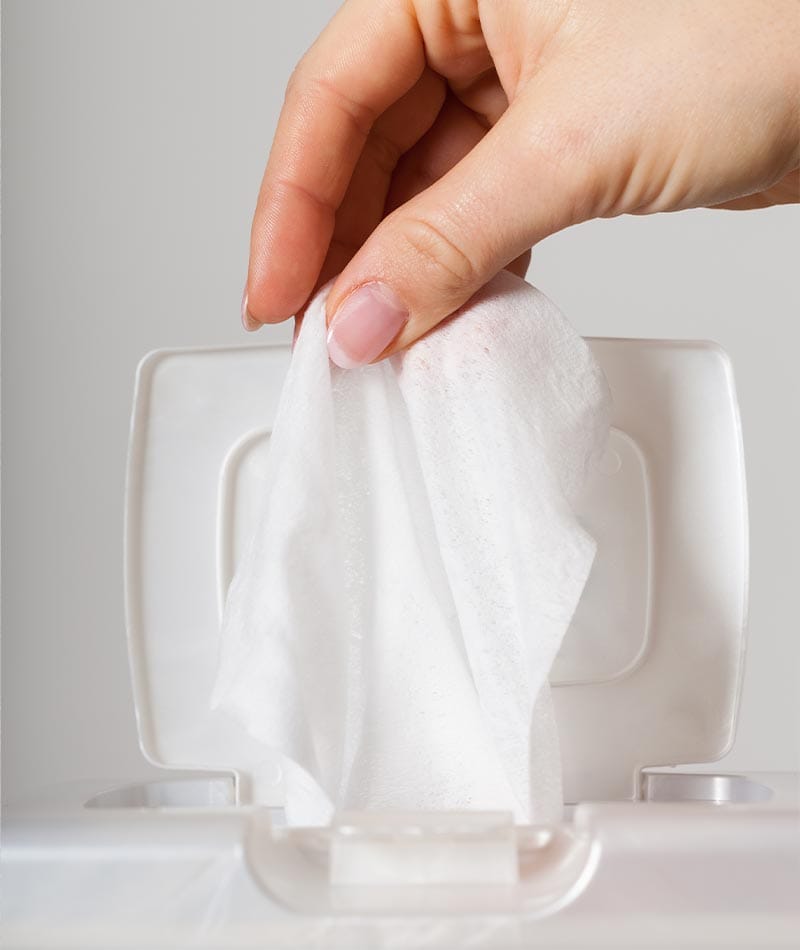
OEM Wet Wipes Packaging Development Process
A structured OEM packaging process may include:
- Confirm the product application
- Select the wipe material and sheet size
- Determine the formula and moisture loading
- Choose the package format
- Confirm sheet count and folding method
- Test dispensing and moisture retention
- Approve the packaging structure
- Prepare and review artwork
- Produce a printed sample or proof
- Approve the final reference sample
- Confirm carton packing
- Inspect bulk production
Beierjie provides material, formula, sheet-size, packaging, and private label customization across its wet wipes and disposable hygiene product range.
Frequently Asked Questions
Which packaging is best for wet wipes?
There is no single best format. The right choice depends on the product application, sheet count, moisture level, sales channel, customer expectations, and target cost.
Is a flip-top lid better than a resealable label?
A flip-top lid may provide more convenient repeated use, particularly for large packs. A resealable label may be lighter and more economical for travel packs and lower sheet counts.
Can the wet wipes package size be customized?
Yes. Package dimensions can often be adjusted according to wipe size, sheet count, folding method, film structure, and closure type. Customization may affect minimum order quantity and lead time.
Can private label brands customize the lid color?
Standard and custom lid colors may be available depending on the packaging supplier, production quantity, and project requirements.
Are individual sachets suitable for personal care wipes?
Yes. Individually wrapped wipes can be suitable for hospitality, travel, beauty, feminine care, promotional, and single-use applications.
Can the packaging prevent wet wipes from drying out completely?
A properly designed package can reduce moisture loss, but performance depends on film barrier properties, sealing quality, closure design, storage conditions, formula loading, and frequency of use.
Final Thoughts
Selecting the right wet wipes packaging type requires more than comparing appearance and price. Buyers should consider moisture retention, dispensing, repeated use, formula compatibility, labeling space, transportation, and the expectations of the end customer.
Soft packs are flexible and widely used. Flip-top lids support convenient repeated opening. Canisters suit many surface-cleaning products, while individual sachets work well for travel, hospitality, and controlled single use.
Before approving bulk production, test the final wipe material, formula, folding method, and packaging together.
To develop a customized wet wipes product, contact Beierjie and provide your target market, product application, preferred packaging type, sheet count, wipe dimensions, and estimated order quantity.