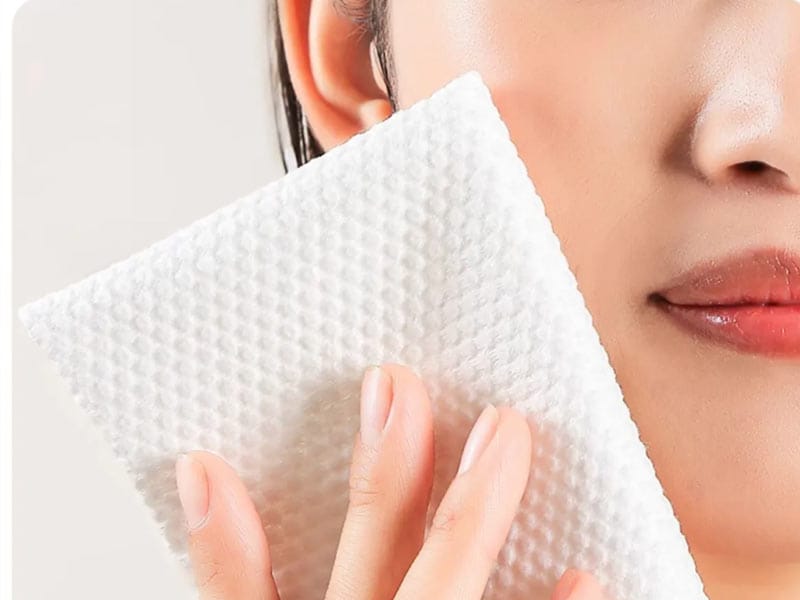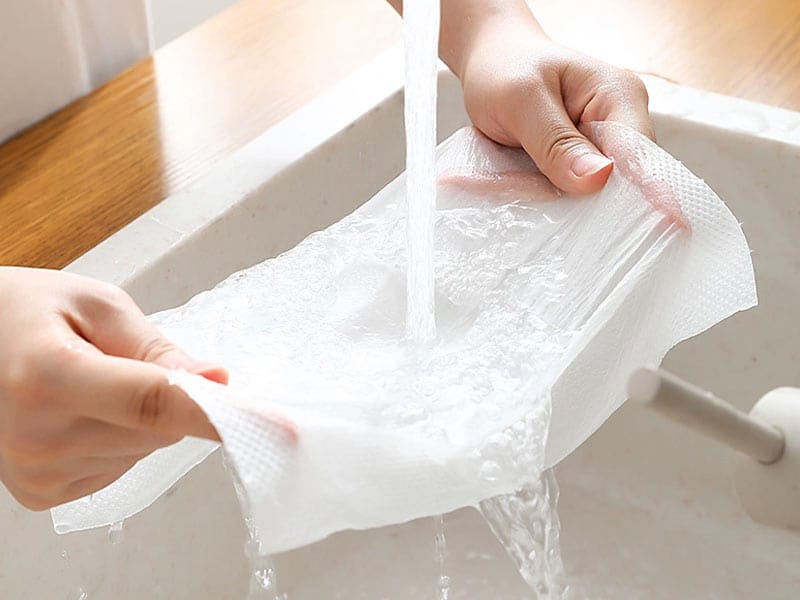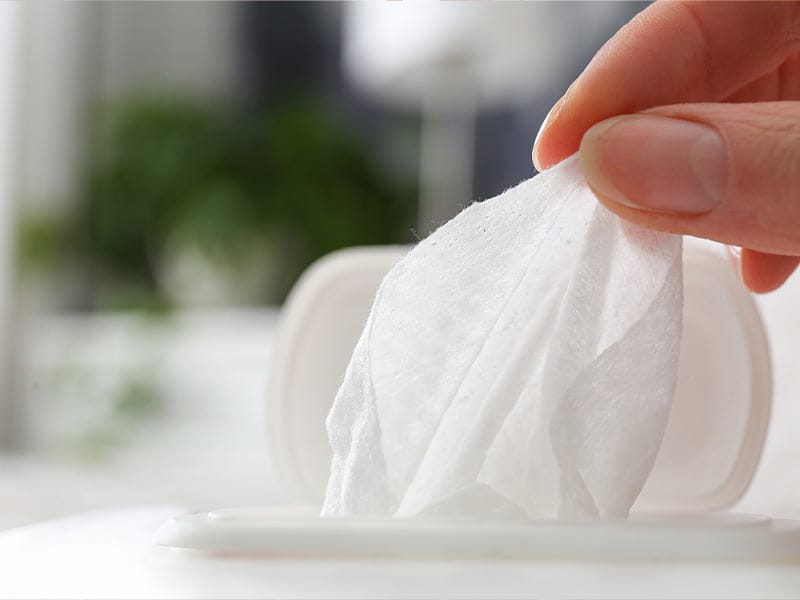
The performance of a wet wipe depends on more than its liquid formula. The base fabric directly affects softness, absorbency, wet strength, linting, dispensing performance, product appearance, and overall production cost.
For private label brands, wholesalers, and hygiene product distributors, choosing the right spunlace nonwoven fabric for wet wipes is therefore an important part of product development.
A material suitable for household cleaning wipes may feel too rough for baby care. At the same time, an extremely soft material may not provide enough strength for demanding cleaning applications.
This guide explains how spunlace nonwoven fabric is produced, which specifications buyers should evaluate, and how to select an appropriate wet wipes material for different OEM projects.
What Is Spunlace Nonwoven Fabric?
Spunlace is a type of nonwoven fabric produced by using high-pressure water jets to entangle loose fibers into a stable fabric structure. This production method is also known as hydroentangling.
Unlike woven textiles, spunlace fabric does not require fibers to be spun into yarn and then woven or knitted. Instead, water pressure rearranges and interlocks the fibers to create a soft, flexible, and durable sheet.
According to the INDA Nonwovens Glossary, spunlace refers to a nonwoven fabric produced through hydroentangling technology.
Because its fiber composition, weight, surface texture, and strength can be adjusted, spunlace fabric is widely used in:
- Baby wipes
- Facial cleansing wipes
- Feminine hygiene wipes
- Adult cleansing wipes
- Household cleaning wipes
- Disinfecting wipes
- Disposable face towels
- Beauty and personal care products
Buyers developing skin-contact hygiene products can review our range of personal care wipes to understand how different materials can be used for various applications.
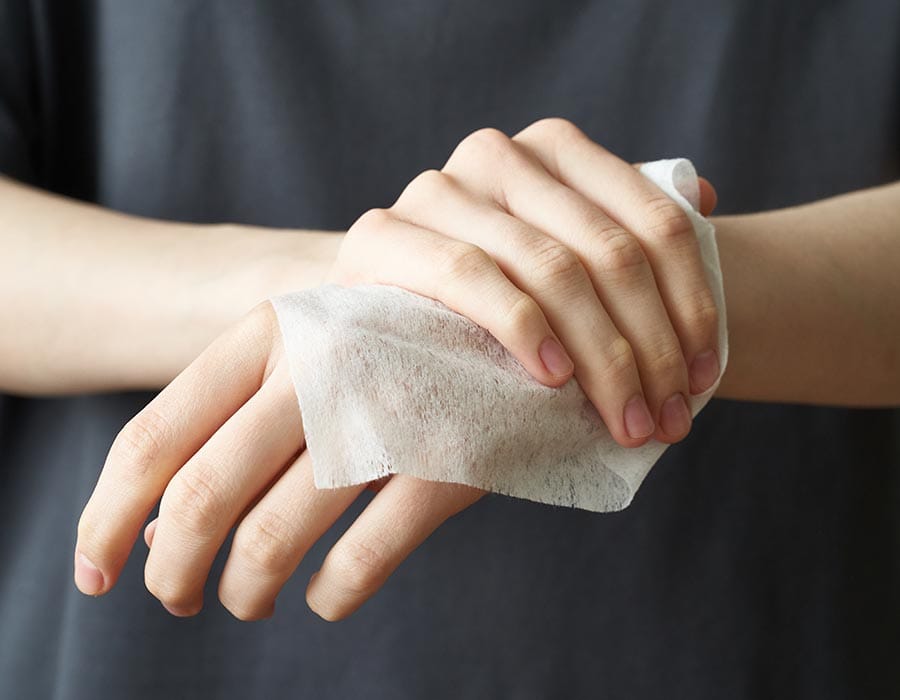
Why Is Spunlace Commonly Used for Wet Wipes?
Spunlace nonwoven fabric provides a useful balance between softness, absorbency, strength, and production flexibility.
Soft and Comfortable Surface
A properly designed spunlace material can provide a smooth, textile-like hand feel. This makes it suitable for products used on the face, hands, intimate areas, and sensitive skin.
However, the softness of a wet wipe is affected by more than fabric weight. Important factors include:
- Fiber type
- Fiber blend ratio
- Fabric density
- Surface pattern
- Moisture content
- Manufacturing process
A higher GSM does not always mean that a wipe will feel softer. Buyers should compare finished samples instead of selecting a material only from a technical specification sheet.
Reliable Wet Strength
Wet wipes remain saturated with liquid during storage and use. The base material must resist tearing, stretching, or breaking when it is removed from the package.
Good wet strength is especially important for:
- Baby diaper changes
- Facial cleansing
- Adult care
- Kitchen degreasing
- Surface cleaning
- Institutional hygiene
A material that feels strong when dry may behave differently after absorbing a wet wipes formula. For this reason, fabric samples should be tested together with the intended lotion.
Liquid Absorption and Retention
The nonwoven fabric must absorb enough solution to keep each sheet evenly moist without releasing excessive liquid during use.
The material structure affects:
- Lotion absorption
- Moisture distribution
- Liquid release
- Package weight
- Sheet consistency
- Risk of upper wipes drying out
Facial cleansing wipes may require controlled moisture release, while larger household wipes may need higher liquid loading and stronger fluid retention.
Low Linting Performance
Loose fibers can reduce product quality and leave visible residue on the skin or cleaned surface.
Linting performance depends on fiber length, fiber bonding, material composition, cutting quality, and surface pattern. Before approving a substrate, buyers should test it on skin, glass, mirrors, stainless steel, and other relevant surfaces.
Common Fiber Blends for Spunlace Wet Wipes
Spunlace fabric can be produced from different fibers and fiber combinations. Each option creates a different balance of softness, strength, absorbency, cost, and environmental positioning.
Viscose and Polyester Spunlace
Viscose and polyester is one of the most commonly used fiber combinations for wet wipes.
Viscose generally contributes:
- Softness
- Absorbency
- Comfortable skin feel
- Good liquid distribution
Polyester generally contributes:
- Wet strength
- Tear resistance
- Dimensional stability
- Improved durability
Changing the ratio of viscose and polyester changes the fabric’s performance. A higher viscose percentage may improve softness and absorbency, while a higher polyester percentage may increase strength.
This blend can be used for:
- Personal cleansing wipes
- Facial wipes
- General hygiene wipes
- Travel wipes
- Household cleaning products
100% Viscose Spunlace
A 100% viscose substrate can provide a soft and absorbent surface. It may be suitable for personal care products positioned around comfort or plant-derived materials.
However, OEM buyers should still evaluate:
- Wet tensile strength
- Stretching
- Dispensing performance
- Formula compatibility
- Packaging stability
- Product cost
The use of viscose alone does not automatically prove that the finished wipe is biodegradable, plastic-free, or flushable. Environmental claims should be supported by the complete material composition and appropriate testing.
Cotton-Based Spunlace
Cotton-based spunlace may be selected for premium personal care and skin-contact products.
Potential benefits include:
- Soft surface feel
- Good absorbency
- Familiar consumer perception
- Suitability for sensitive-use applications
When sourcing cotton wipes, buyers should confirm the actual cotton percentage, processing method, purity level, and available certifications.
For infant care projects, our baby cleansing wipes can be customized with different nonwoven materials, sheet dimensions, formulas, and packaging options.
Wood Pulp Blends
Wood pulp can be combined with other fibers to produce absorbent nonwoven materials for disposable towels, household cleaning, and selected hygiene applications.
These blends may provide:
- High liquid absorption
- Flexible cost options
- Different surface textures
- A paper-like or cloth-like appearance
However, wood pulp content alone does not make a wet wipe safely flushable. Flushability depends on the complete product structure and must be evaluated through relevant dispersibility and drainage-system testing.
How Does GSM Affect Wet Wipe Performance?
GSM means grams per square meter. It indicates the weight of the fabric rather than the weight of an individual wipe.
GSM is an important wet wipes material specification, but it should not be evaluated alone.
| GSM level | General characteristics | Possible applications |
|---|---|---|
| Lower GSM | Lightweight, thinner and economical | Travel wipes, promotional wipes and light cleansing |
| Medium GSM | Balance of softness, strength and cost | Baby wipes, facial wipes and personal care wipes |
| Higher GSM | Thicker feel and stronger perceived quality | Adult care, premium wipes and heavy-duty cleaning |
These are general guidelines rather than fixed rules. Two fabrics with the same GSM may perform differently because of fiber composition, material density, pattern, thickness, and manufacturing technology.
When comparing different GSM options, buyers should evaluate:
- Dry thickness
- Wet thickness
- Tensile strength
- Stretch during dispensing
- Liquid absorption
- Moisture release
- Surface softness
- Linting performance
Plain, Pearl, Mesh and Embossed Textures
The surface texture of spunlace fabric affects product appearance, cleaning performance, and customer perception.
Plain Spunlace
Plain spunlace has a simple and smooth surface. It may be suitable for economical wet wipes and gentle personal cleansing applications.
Pearl Pattern
A pearl or dotted pattern can create a fuller visual appearance and improve the perceived thickness of the wipe.
It is often considered for baby wipes, personal care wipes, and premium retail products.
Mesh Pattern
A mesh pattern may provide additional surface contact and help collect dirt, makeup, grease, or residue.
Depending on the softness and pattern depth, mesh spunlace may be used for facial cleansing or household cleaning wipes.
Custom Embossing
Custom embossing can help private label brands create a more recognizable product.
However, customized patterns may involve:
- Additional tooling
- Higher minimum order quantities
- Longer development times
- Increased production costs
- Additional sample approval
The most visually attractive pattern is not always the best-performing option. Buyers should test the texture based on the intended application.
Matching Spunlace Material to Different Wet Wipes
Different wet wipe categories require different material properties.
Baby Wipes
Baby wipes generally require:
- Soft hand feel
- Low linting
- Reliable wet strength
- Smooth edges
- Controlled moisture release
- Consistent sheet dimensions
- Compatibility with a mild formula
The material should remain strong during use without feeling stiff or abrasive.
Facial Cleansing Wipes
Facial wipes often require:
- A soft surface
- Low linting
- Controlled stretch
- Effective makeup contact
- Comfortable moisture levels
- Smooth dispensing
For makeup removal applications, textured spunlace may improve cleansing performance, but the surface should not be excessively rough.
Buyers developing facial cleansing products can review our facial cleansing wipes for available OEM material, formula, and packaging options.
Feminine Hygiene Wipes
Feminine hygiene wipes usually require:
- Soft and comfortable material
- Appropriate sheet size
- Low linting
- Reliable package sealing
- Formula compatibility
- Portable packaging
Claims such as alcohol-free, fragrance-free, soothing, natural, or hypoallergenic must be accurate and supported where required.
The U.S. FDA guidance on disposable wipes explains that the regulatory treatment of wipes can depend on their intended use and product claims.
Household Cleaning Wipes
Household cleaning wipes generally place more emphasis on:
- Tear resistance
- Scrubbing performance
- Wet strength
- Larger sheet size
- Formula compatibility
- Low linting on surfaces
A fabric designed for gentle facial cleansing may not provide enough strength for kitchen grease, floor cleaning, or repeated wiping.
Disinfecting Wipes
For disinfecting wipes, the fabric must work together with the active liquid formula and packaging system.
Buyers should evaluate:
- Formula absorption
- Liquid release
- Surface coverage
- Evaporation rate
- Packaging seal
- Material stability
- Required contact time
The term “disinfecting” should only be used when the finished product and its claims meet the applicable requirements of the target market.
For surface hygiene applications, see our customizable disinfecting wipes.
Material Specifications OEM Buyers Should Confirm
Before requesting a quotation, buyers should provide the manufacturer with a clear product specification.
| Specification | Information to confirm |
|---|---|
| Product application | Baby care, facial care, personal hygiene or surface cleaning |
| Fiber composition | Viscose, polyester, cotton or blended fibers |
| GSM | Required fabric weight or available sample options |
| Sheet size | Unfolded and folded dimensions |
| Surface pattern | Plain, pearl, mesh or customized embossing |
| Softness | Target hand feel or reference sample |
| Wet strength | Required resistance to pulling and scrubbing |
| Absorbency | Expected formula loading and liquid release |
| Linting | Target skin area or cleaning surface |
| Formula | Alcohol-free, cleansing, moisturizing or disinfecting |
| Packaging | Soft pack, flip-top lid, canister or sachet |
| Market | Country or region where the product will be sold |
A complete specification allows manufacturers to prepare more accurate samples and quotations.
Spunlace Nonwoven Fabric for Wet Wipes: How to Evaluate Wet Wipe Material Samples
Material approval should not be based only on appearance.
Step 1: Inspect the Dry Material
Check:
- Thickness
- Softness
- Odor
- Color
- Surface pattern
- Loose fibers
- Edge quality
Step 2: Test the Material with the Formula
A wet wipes formula can change the strength and feel of the substrate. Evaluate whether the material becomes too soft, slippery, stretched, weak, or stiff after saturation.
Step 3: Test Dispensing Performance
Place the material in the proposed packaging and repeatedly remove individual sheets.
Check for:
- Multiple sheets dispensing together
- Sheets tearing at the opening
- Excessive stretching
- Wipes falling back into the package
- Poor folding consistency
- Interference with the lid
Step 4: Test the Intended Application
Baby wipe samples should be tested for representative personal cleansing tasks, while household wipes should be tested on the intended surfaces.
The material should be evaluated under realistic use conditions.
Step 5: Record the Approved Specification
The approved sample should be supported by a written specification covering:
- Fiber composition
- GSM
- Sheet dimensions
- Folding method
- Formula loading
- Packaging format
- Production tolerances
This specification can then be used as a reference for bulk production and repeat orders.
Common Wet Wipes Material Selection Mistakes
Choosing Material Only by Price
The lowest-priced material may have lower GSM, weaker wet strength, greater linting, or inconsistent production quality.
Although it may reduce the initial unit cost, poor material performance can lead to customer complaints, tearing, leakage, and weak repeat purchases.
Assuming Higher GSM Is Always Better
A heavier wipe may feel thicker, but it also increases:
- Material consumption
- Formula consumption
- Package weight
- Shipping cost
- Production cost
The appropriate GSM should match the actual product use and market position.
Ignoring Formula Compatibility
Alcohol, fragrance, surfactants, preservatives, plant extracts, and other ingredients can affect the substrate.
The fabric and formula should always be tested together before bulk production.
Using Unsupported Environmental Claims
Terms such as biodegradable, eco-friendly, natural, plastic-free, and flushable may have specific legal and technical implications.
Buyers should confirm the complete fiber composition, product performance, testing method, packaging, and target-market requirements before using these claims.
Approving Only a Hand-Packed Sample
Laboratory or manually packed samples may not behave exactly like products made on a production line.
Before a large order, buyers may need to evaluate a production trial covering folding, liquid filling, sealing, and dispensing.
How to Select an OEM Wet Wipes Manufacturer
A qualified OEM wet wipes manufacturer should help buyers compare different substrate options rather than recommending a single material without explanation.
A typical development process may include:
- Confirming the intended application
- Defining the target market and price level
- Selecting fiber and GSM options
- Preparing material samples
- Testing the fabric with the formula
- Confirming folding and packaging
- Reviewing labeling and product claims
- Approving the final reference sample
- Recording the production specification
- Inspecting bulk production
Beierjie provides customizable materials, formulas, sheet sizes, packaging formats, sheet counts, and private label services across its wet wipes and disposable hygiene product range.
FAQ
Is spunlace the same as nonwoven fabric?
Spunlace is one type of nonwoven fabric. It is made through hydroentangling, while other nonwoven materials may be produced through spunbonding, thermal bonding, chemical bonding, airlaid technology, or other methods.
What GSM is suitable for baby wipes?
There is no single GSM suitable for every baby wipe. The right option depends on the fiber blend, softness, sheet size, formula loading, target cost, and desired product positioning.
Several finished samples should be compared before making a final decision.
Is viscose better than polyester for wet wipes?
Viscose and polyester perform different functions.
Viscose generally improves softness and absorbency, while polyester can increase strength and dimensional stability. Many wet wipes use a blend to balance these properties.
Can spunlace wet wipes be biodegradable?
Some fiber compositions may have improved biodegradability potential. However, the final claim depends on the complete substrate, formula, additives, packaging, testing method, and applicable regulations.
Final Thoughts
Choosing the right spunlace nonwoven fabric for wet wipes requires a balance between softness, wet strength, absorbency, linting, product cost, packaging performance, and intended use.
Instead of selecting a material only by GSM or price, buyers should compare multiple finished samples with the intended formula and packaging.
A written product specification and an approved reference sample are essential for maintaining consistency during bulk production and future repeat orders.
To develop a private label wet wipes product, contact Beierjie with your intended application, target market, preferred material, sheet size, packaging format, and estimated order quantity.