Table of Contents
Beierjie brings together wet wipes, disposable face towels, tissue paper, and adult care products for brands, distributors, and institutional buyers. This guide introduces the company information behind the website, maps the product range, and explains how to prepare an OEM or private label inquiry that can move into a clearly defined project.
For buyers evaluating Beierjie, the useful question is not simply how many products appear in a catalog. It is whether the material, application, packaging, quality requirements, and supply arrangements can be aligned around a repeatable specification. Use the sections below to find the relevant product family and the detailed buying guides for your next decision.
The company behind the Beierjie website
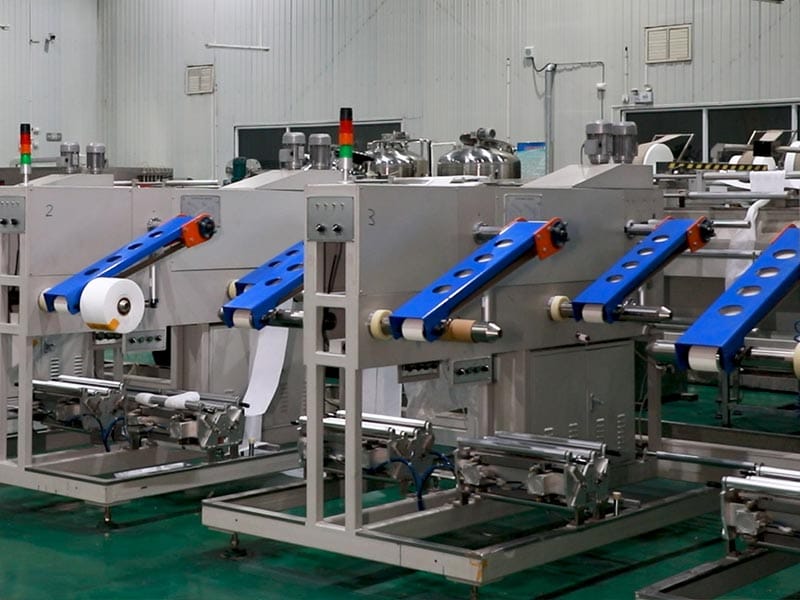
The Beierjie website identifies Huairen City Senda Medical Equipment Co., Ltd. as its company. The company profile and development history state that Senda was founded in 2007 and is based in Huairen, Shanxi, China. The profile describes automated production equipment, research and development, and hygiene-product manufacturing.
These capabilities give a Beierjie sourcing discussion a practical starting point: product development, production, and packaging can be considered together. A material decision should be assessed alongside the formula and pack; a new pack should be checked against dispensing and transport requirements. Treat the finished product as a coordinated system rather than a collection of separate purchasing choices.
When qualifying Beierjie for an order, request current company and factory information against the intended product scope. Confirm the legal entity named on the quotation, contract, and relevant supporting documents. This keeps purchasing records clear from the initial inquiry through later reorders.
Explore the Beierjie product range
The Beierjie catalog covers five main product directions. The table below is a navigation aid, not a statement that every format or specification is available for every order. Start with the application, then confirm the exact options with the team.
| Product family | Typical buying context | Specification priorities | Explore |
|---|---|---|---|
| Personal care wipes | Personal hygiene and branded cleansing ranges | Intended user, material, formula, sheet size | Personal care range |
| Household cleaning wipes | Home-care and surface-cleaning ranges | Target soil, surface compatibility, directions | Household cleaning range |
| Disposable face towels | Skincare, travel, and hospitality supply | Size, absorbency, lint, wet handling | Face towel range |
| Tissue paper | Retail, office, and hospitality supply | Ply, sheet count, softness, dispensing | Facial tissues |
| Adult care products | Care-product distribution and private label ranges | Fit, intended use, absorbency, packaging | Adult care range |
A focused Beierjie brief can start with one lead product rather than an entire assortment. Approving a manageable initial range makes it easier to compare samples, control artwork versions, and establish replenishment requirements before adding related items.
Personal care wipes: define the user first
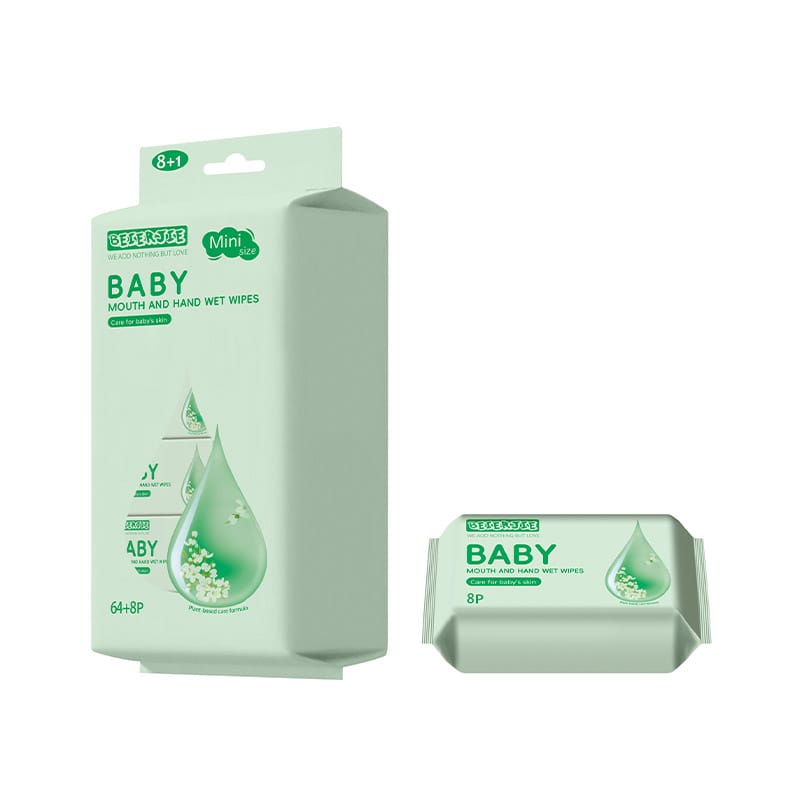
Beierjie lists baby cleansing wipes and other personal care wipe options. For a baby-care project, begin with the intended cleansing use, wipe size, preferred hand feel, and dispensing format. A retail multipack and a travel pack may need different packaging decisions even when they share a product concept.
The baby cleansing wipes product page is a useful starting point. Follow it with the sensitive-skin formula development guide when preparing ingredient preferences, fragrance direction, or proposed claims.
Ask Beierjie to separate the desired marketing position from the evidence needed to support it. Terms such as gentle, sensitive-skin, or hypoallergenic should not be inferred solely from a fragrance-free formula. Keep the proposed wording, intended users, and evaluation requirements together in the development brief.
Household wipes: match the product to the surface
Beierjie also presents household cleaning products, including kitchen degreasing wipes. Buyers should identify the surfaces and soils the product is expected to address before choosing a formula or making performance claims.
Specify whether the task is routine wiping, grease removal, or a separately substantiated disinfecting application. Cleaning and disinfection are not interchangeable product promises. Do not carry a claim from one catalog item onto another without confirming the exact product, evidence, and intended market.
For a Beierjie household-wipe sample review, assess cleaning performance alongside residue, odor, dispensing, and pack resealing. Include the proposed directions for use in the review; a sample and a label should describe the same job.
Face towels, tissue paper, and adult care
Beierjie gives buyers a route to discuss dry hygiene products alongside wet wipes. This can be useful when building a coordinated assortment, but each category needs its own specification and approval criteria.
For disposable face towels, compare unfolded size, material composition, lint, absorbency, and handling after wetting. A dry towel is not simply a wet wipe without liquid. The face towel sourcing guide helps organize those decisions.
For tissue paper, look beyond the number of layers. Beierjie buyers can use the two-ply versus three-ply facial tissue comparison to assess basis weight, softness, pack fit, and dispensing on comparable samples.
Adult care projects require a separate discussion of sizing, construction, absorption expectations, and the user’s care routine. Ask for the available product specifications and relevant evaluation information rather than selecting a product from its appearance alone.
OEM and private label customization
Beierjie describes OEM and private label support covering materials, formulas, sizes, packaging, and branding. The scope should be agreed for the chosen product; a customization option shown elsewhere in the catalog is not automatically suitable for every format.
Prepare a brief that distinguishes mandatory requirements from preferences. Mandatory items might include the destination market, pack count, sheet dimensions, or approved ingredient restrictions. Preferences might include a particular texture or opening style that can be reconsidered after sample evaluation.
When discussing materials with Beierjie, use precise terms. Fiber composition, basis weight, texture, and wet strength describe different attributes. EDANA’s introduction to nonwovens provides useful industry background; it is not an endorsement of any supplier or a test report for an individual product.
For a deeper material discussion, consult the GSM and fabric selection guide. Bring the resulting requirements into the sample request so comparisons are based on the intended finished product, not just a fabric swatch.
Packaging that supports the product
Beierjie presents several packaging formats across its website, including soft packs, lidded packs, and boxed products. Choose a format around the product and use occasion, then confirm availability, dimensions, and compatibility for that specific project.
For wet wipes, evaluate resealing, liquid retention, single-sheet dispensing, and the interaction between the formula and packaging. For tissues and dry towels, check the opening, stack fit, and protection during handling. Branding should follow those functional decisions, not replace them.
The packaging requirements checklist provides a more detailed approval framework. Before Beierjie proceeds with an agreed packaging version, align the artwork, barcode information, required label text, count, and outer-carton identification.
From sample development to production approval
A Beierjie project should move through identifiable decisions: define the brief, review proposed specifications, evaluate samples, approve the final version, and confirm production and delivery arrangements. The company’s ordering information outlines inquiry, order confirmation, production, and delivery; the detail belongs in the project agreement.
Keep feedback specific. Instead of asking for a better wipe, identify whether the issue is lint, sheet dimensions, moisture distribution, fragrance, tearing, or dispensing. Separate product changes from packaging changes so the reason for each new sample is clear.
Use the sample development checklist to plan the review. Retain an approved reference and a written specification. A later change to material, formula, or packaging should trigger an assessment of whether additional samples or testing are needed.
Quality evidence and company capability
Beierjie presents production and inspection imagery and describes quality management in its company information. Buyers can use this material to prepare a supplier review, then request documents that match the planned product and manufacturing site.
Review current certificates for the company name, scope, issue details, and validity. ISO’s explanation of certification clarifies that independent certification bodies issue certificates; ISO itself does not certify companies. A management-system certificate should not be presented as proof of every product claim.
For Beierjie order approval, distinguish company-level documentation from batch and product evidence. The wet wipes quality-control guide covers practical questions about materials, finished-product checks, packaging, and consistency. Agree which reports, acceptance limits, and records are relevant before production begins.
Order planning, delivery, and after-sales support
Beierjie describes customer support for product inquiries and quality issues. Make that support actionable by agreeing on the communication contact, order reference, specification revision, and information needed when reporting a concern.
Request a project-specific minimum order quantity and delivery schedule. Product construction, printed packaging, material availability, sample revisions, and approval timing can affect the plan. Do not treat a general website estimate as a confirmed commitment for a new custom order.
Before shipment, confirm pack quantities, carton markings, shipping arrangements, and the documentation required for the destination. For a repeat Beierjie order, reference the approved version explicitly. If a problem arises, record the batch identification, photographs, affected quantity, and storage or handling context so it can be investigated efficiently.
Frequently asked questions
What products can buyers discuss with Beierjie?
The catalog includes personal care wipes, household cleaning wipes, disposable face towels, tissue paper, and adult care products. Start with the relevant category and request the current specifications for the intended application.
Does Beierjie support private label projects?
The website describes OEM and private label customization. Confirm the available material, formula, size, pack, and branding options for the selected product rather than assuming every option applies across the range.
Can one inquiry cover several product families?
Yes, an inquiry can describe the complete assortment you want to develop. Separate the requirements for each item so samples, packaging, quantities, and approval criteria can be evaluated independently.
What quality documents should a buyer request?
Request current company and relevant system documents, the finished-product specification, and supporting reports for the agreed performance or claims. Check that each document applies to the relevant entity, site, product, and version.
What should be included in a first inquiry?
Provide the product type, intended use, destination market, required size and pack count, quantity forecast, packaging preference, and target launch timing. Include a reference sample or specification when available.
Start a Beierjie project with a clear brief
Use this overview to narrow the product family, then use the linked guides to resolve the technical decisions. A useful inquiry gives the team enough information to discuss feasible options, identify missing requirements, and propose the next sample or specification step.
Contact Beierjie about your OEM or private label project with your target market, selected products, expected quantities, and packaging requirements. Request written confirmation of the proposed scope, sample process, supporting documentation, and order terms before making a production commitment.
PREVIOUS POST
2-Ply vs 3-Ply Facial Tissue: A Practical Buyer’s Guide