Table of Contents
Choosing between two and three plies is not simply a decision between basic and premium. For a private label facial tissue range, the right construction depends on sheet size, fiber quality, softness, dispensing performance, and how customers will use the product. An extra layer can change the feel, but it cannot compensate for an unsuitable base sheet or a poorly designed box.
This guide explains how retail, hospitality, and office-supply buyers can compare facial tissue samples on equal terms, write a useful specification, and approve a product without relying on ply count alone.
What does ply mean in facial tissue?
A ply is an individual paper layer within a finished sheet. Two-ply facial tissue combines two layers; three-ply combines three. The layers work together during use, but their individual basis weights, bonding, and texture influence the result.
Always distinguish finished sheets from individual plies when discussing pack counts. A box containing 100 finished three-ply sheets does not provide 300 separate tissues. Ask the supplier to state the counting basis on the specification and check that the artwork communicates the same quantity clearly.

Two-ply vs three-ply: the practical differences
The following comparison describes buying considerations, not guaranteed performance. A well-made two-ply facial tissue may suit a project better than a three-ply alternative with weaker fibers or inconsistent converting.
| Buying criterion | Two-ply construction | Three-ply construction | What to verify |
|---|---|---|---|
| Hand feel | Can feel light and flexible | Can feel fuller and more cushioned | Blind comparison of finished samples |
| Strength | Depends on fibers and sheet formation | Additional layer may improve robustness | Test results using the same method |
| Pack fit | May allow a slimmer stack | May require more space at the same count | Actual filled-pack dimensions |
| Dispensing | Depends on fold and opening geometry | Depends on fold and opening geometry | First, middle, and final pulls |
| Range positioning | Often considered for everyday use | Often considered for a fuller-feel range | Customer expectations and sample feedback |
Compare basis weight, not only layer count
When comparing facial tissue quotations, request both the basis weight per ply and the total basis weight of the finished sheet. Otherwise, two suppliers may describe very different constructions using the same ply count.
Total nominal basis weight is the sum of the individual layers. That relationship does not predict softness or absorbency by itself. Embossing, creping, fiber selection, and converting also affect the finished product. Ask whether the stated value is nominal, how it is measured, and what production tolerance applies.
Keep unfolded facial tissue sheet dimensions constant during comparison. A larger sheet can feel more substantial even when its construction is lighter. Recording dimensions alongside ply count prevents a size difference from being mistaken for a quality difference.
Assess softness and lint with a repeatable routine
Softness is central to facial tissue selection, yet casual handling produces inconsistent judgments. Remove brand cues from facial tissue samples, label them with neutral codes, and ask the same group of reviewers to compare them under similar conditions.
Separate surface smoothness from bulk softness. One sample may feel smooth when stroked but stiff when folded; another may feel cushioned while releasing more visible fibers. Record these observations separately instead of reducing everything to a single premium-or-basic label.
For a practical lint screen, use a consistent rubbing action over the same contrasting surface and compare the residue. This is an internal screening procedure, not a substitute for an agreed laboratory method. Keep photographs and retain samples so the approved appearance can be checked against later production.
Check strength and absorption as separate properties
A facial tissue sample that feels thick is not automatically strong. Compare resistance to tearing during removal, unfolding, and ordinary handling. If a supplier provides test figures, request the method, sample conditioning, units, and direction of testing before comparing the results.
ISO 12625-4:2022 describes methods for measuring tensile strength, stretch at maximum force, and tensile energy absorption of tissue paper and tissue products. Referencing the method helps define a test request; it does not establish that any particular product is certified or meets an agreed acceptance level.
Also assess facial tissue liquid uptake independently. Use equal-size samples and a consistent procedure when screening absorption. Do not assume that strong dry paper will behave the same way after contact with moisture. For tasks requiring repeated wet wiping, evaluate a purpose-designed product rather than treating ordinary facial tissue as a washcloth.
Test dispensing in the final package
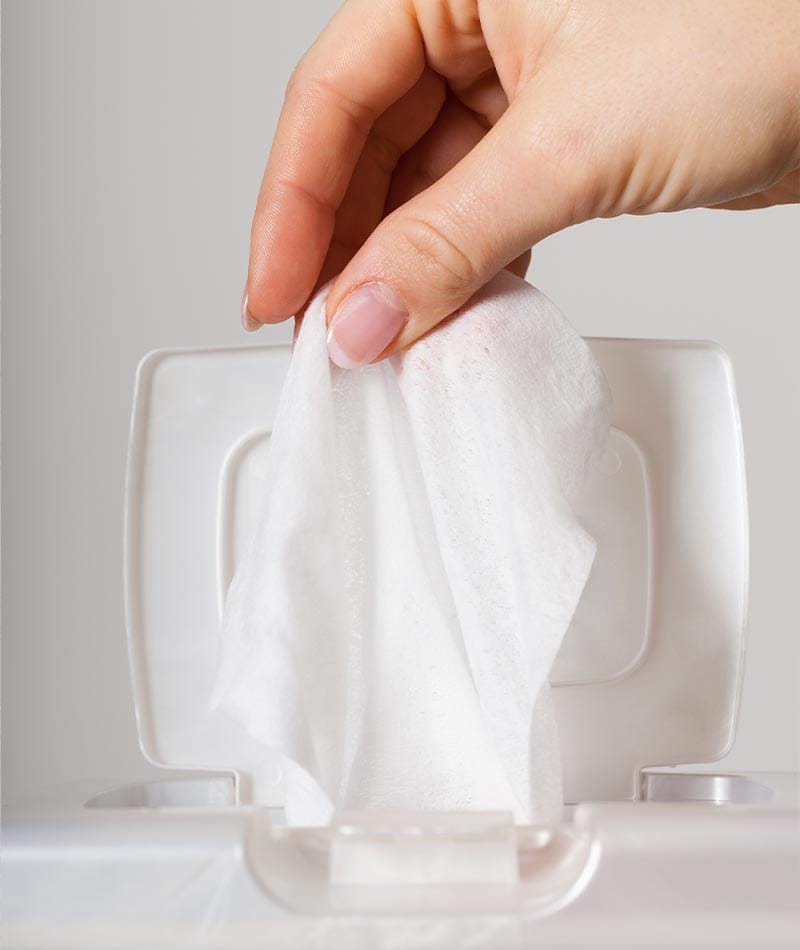
Facial tissue approval should include a filled production-representative pack, not just a loose stack of sheets. Interfolding, stack compression, the dispensing opening, and the package material all influence whether sheets come out cleanly.
Check the first pull, repeated pulls through the middle, and the last few sheets. Note double pulls, tearing at the opening, sheets falling back inside, and layers separating. Repeat the facial tissue check on more than one pack; one smooth pull is not meaningful evidence of consistency.
When changing facial tissue ply count, confirm the pack dimensions again. Keeping the same sheet count does not guarantee the same stack height. A tight box may create dispensing resistance, while an oversized one can let the remaining stack move around.
Match the specification to your sales channel
For office supply, predictable dispensing and an appropriate refill interval may matter more than a noticeably bulky sheet. Hospitality buyers may prioritize presentation, holder compatibility, and a consistent guest experience. Retail brands should consider how the product feels alongside the rest of their range.
Before selecting facial tissue for a new line, define the intended user and package location. A compact bedside facial tissue box, a reception counter pack, and a household soft pack impose different dimensional constraints. Confirm those constraints before approving artwork or ordering outer cartons.
Review Beierjie’s facial tissues product page as a starting point for the product discussion. For a broader sourcing checklist, see the OEM buying guide for retail, hospitality, and office supply brands.
Write a sample approval checklist before ordering
Your facial tissue specification should describe measurable requirements as well as the approved appearance and feel. Agree on acceptance criteria before production rather than deciding whether a shipment is acceptable after it arrives.
- Fiber composition, ply count, and nominal basis weight per layer.
- Unfolded sheet dimensions, finished-sheet count, and agreed tolerances.
- Embossing pattern, layer attachment, softness reference, and lint expectations.
- Pack dimensions, dispensing opening, fold format, and artwork version.
- Relevant test methods, reporting units, and acceptance limits.
- Outer-carton configuration, identification, and retained reference samples.
Retain a signed or otherwise traceable approved sample and its specification revision. If the supplier proposes a material or packaging change, request a new assessment rather than assuming the original approval still applies.
Frequently asked questions
Is three-ply facial tissue always better than two-ply?
No. Three layers may provide a fuller feel, but overall performance depends on the paper, dimensions, converting, and packaging. Compare the finished products against your intended use rather than ranking them by layer count alone.
Does higher ply count guarantee greater softness?
No. Softness depends on several material and manufacturing factors. Use coded samples and a consistent evaluation routine to distinguish surface smoothness, flexibility, and cushioning.
Can we keep the same box when changing ply count?
Possibly, but it must be checked with a filled sample. Stack height and compression can change, affecting the opening and the ease of dispensing. Confirm performance throughout the pack before retaining the existing dimensions.
How should facial tissue sheet counts be specified?
State the number of finished usable sheets per pack separately from the number of layers in each sheet. Use the same counting basis in the quotation, specification, artwork, and inspection checklist.
What should buyers send with a sample request?
Send the intended sales channel, target sheet size, preferred ply count, finished-sheet count, package format, and any reference samples. Include the destination market and the performance questions you need the samples to answer.
Build the right product brief
The best facial tissue choice is the one that meets your customer’s expectations consistently, not the one with the highest layer count on the label. Start with the intended use, compare samples fairly, and approve the paper and package together.
For a Beierjie facial tissue project, share your required sheet dimensions, pack format, quantity forecast, and target market through the product-page inquiry form. Ask for comparable two-ply and three-ply options with a written specification, then confirm available customization and testing before placing an order.
PREVIOUS POST
Wet Wipes Formula Development for Sensitive Skin: A Buyer’s Guide
NEXT POST
Beierjie Hygiene Products: Manufacturing and OEM Services