Starting a private label wipes brand is more than putting a logo on a pack of wet wipes. You need to make decisions about the product type, target market, wipe material, formulation, packaging, quality standards, and production quantity before placing your first order.
The good news is that you do not need to build your own manufacturing facility. Working with an experienced private label wipes manufacturer can allow a new brand to develop and produce customized wipes without managing the entire manufacturing process itself.
Whether you plan to sell baby wipes, facial cleansing wipes, feminine hygiene wipes, household cleaning wipes, or another type of disposable wipe, the basic development process follows a similar path.
What Are Private Label Wipes?
Private label wipes are products manufactured by one company and sold under another company’s brand name.
Instead of investing in production equipment and operating a wipes factory, a brand works with a manufacturer that can produce the required wipes according to agreed specifications.
The brand usually controls the commercial side of the product, including:
- Brand positioning
- Target customers
- Product concept
- Packaging design
- Sales channels
- Market positioning
The manufacturer may handle:
- Nonwoven material selection
- Formula development or selection
- Wipe production
- Filling and packaging
- Quality control
- Product testing
- Bulk manufacturing
The exact level of customization depends on the project. Some private label programs use an existing formulation and standard product specifications, while a more customized OEM project may involve changes to the substrate, formula, sheet dimensions, packaging, and other production details.
This distinction is important when you begin contacting manufacturers because the level of customization can have a direct effect on development time, MOQ, and cost.
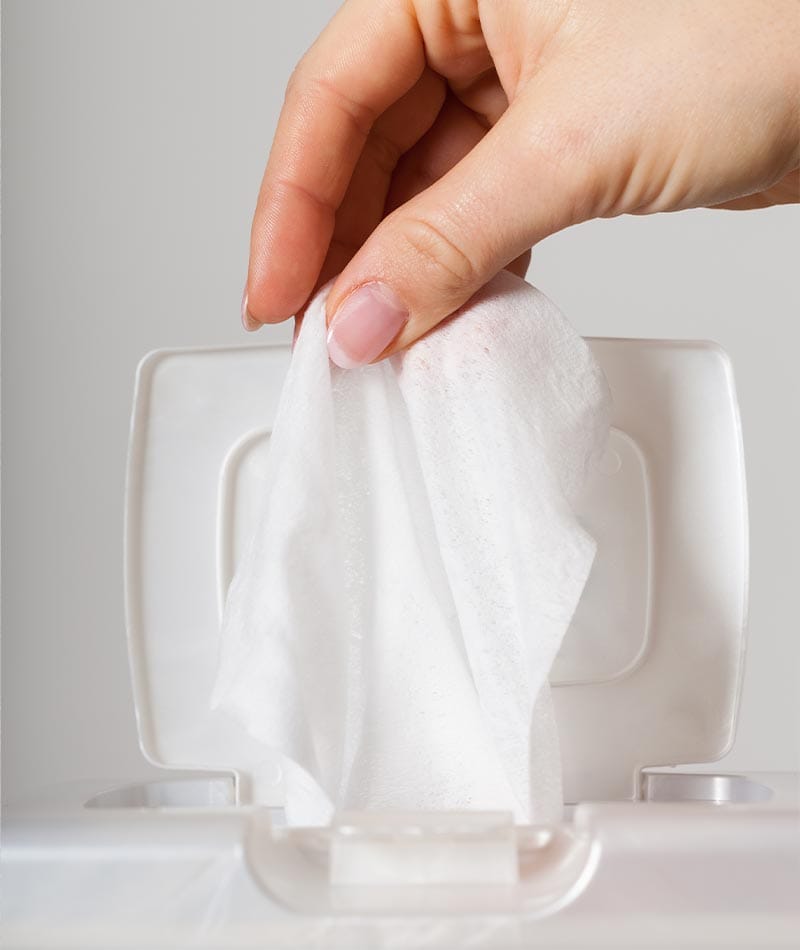
Step 1: Decide What Type of Wipes You Want to Sell
The first decision should be the product category rather than the packaging.
Wipes are used across many different applications. Personal care products may include baby cleansing wipes, facial cleansing wipes, feminine hygiene wipes, and other daily-use products. Household products can include surface cleaning wipes, kitchen degreasing wipes, and disinfecting wipes.
For example, a baby wipes brand may focus on softness and skin compatibility, while a kitchen cleaning wipe may need greater strength and effective grease-removal performance.
Beierjie’s Personal Care Wipes and Household Cleaning Wipes cover different application requirements and can be useful starting points when defining your product concept.
Before requesting a quotation, clarify the following:
| Product decision | What you need to determine |
|---|---|
| Product type | Baby, facial, feminine, household, disinfecting, or another application |
| Target customer | Consumers, retailers, distributors, professional users, or other buyers |
| Target market | Country or region where the product will be sold |
| Main function | Cleansing, moisturizing, degreasing, disinfecting, refreshing, etc. |
| Positioning | Economy, everyday, premium, natural, sensitive-skin, or specialty |
| Sales channel | E-commerce, retail, wholesale, hospitality, pharmacy, or DTC |
The clearer this information is, the easier it becomes for a manufacturer to recommend appropriate specifications.
Step 2: Research Your Target Market
Before developing a private label wipes product, spend some time studying the products already available in your target market.
Look at competing products from a product-development perspective rather than simply comparing prices.
Pay attention to:
- Sheet size
- Number of wipes per pack
- Material
- Packaging format
- Fragrance or fragrance-free positioning
- Product claims
- Retail price
- Customer reviews
Customer reviews can be particularly useful.
If customers repeatedly complain that a wipe is too thin, dries out too quickly, tears during use, or leaves residue, those complaints can help you identify opportunities for product improvement.
The objective is not to copy another product. Instead, use existing products to understand what customers already expect and where your product could offer something different.
Step 3: Choose the Right Wipe Material
The substrate is one of the most important components of a wipe.
Different nonwoven materials provide different combinations of softness, strength, absorbency, thickness, texture, and cost. The right material depends heavily on the intended application.
For example, a facial cleansing wipe may prioritize softness and skin feel, while a household cleaning wipe may require greater tensile strength and liquid retention.
The FDA’s guidance on disposable wipes explains that cleansing wipes can use materials including polyester, polypropylene, cotton, wood pulp, and rayon fibers. It also notes that the regulatory treatment of wipes depends on their intended use.
For this reason, material selection should not be based only on price.
A good specification considers:
Softness + strength + absorbency + thickness + intended application + target cost
Beierjie’s Baby Cleansing Wipes, for example, are designed around personal care applications where material characteristics and formulation both contribute to the overall user experience.
Step 4: Select the Formula
The liquid formulation is another major part of product development.
Depending on the application, you may need to consider:
- Moisture level
- Fragrance or fragrance-free formulation
- Cleansing performance
- Skin feel
- pH
- Preservative system
- Functional ingredients
- Compatibility with the selected substrate
A facial cleansing wipe and a kitchen degreasing wipe obviously require different performance objectives.
For personal care products, it is particularly important to make sure that product claims are supported by the actual formulation and intended use.
The FDA states that cosmetic labeling claims must be truthful and not misleading, and products marketed for therapeutic purposes can fall under drug requirements rather than ordinary cosmetic requirements.
If your product is intended for the U.S. market, reviewing the FDA cosmetics labeling requirements before finalizing your packaging claims can help prevent avoidable problems later.
Step 5: Choose the Sheet Size and Pack Count
Sheet size and pack count directly influence the product’s cost, packaging dimensions, user experience, and market positioning.
A private label wipes manufacturer will normally need information such as:
- Sheet length and width
- GSM
- Thickness
- Folding method
- Number of wipes per pack
- Packaging format
For example, a compact travel pack may use fewer wipes and a smaller sheet, while a household cleaning product may use a larger sheet designed for cleaning larger surfaces.
There is no universal “best” wipe size.
The right specification is the one that provides the expected user experience without creating unnecessary material and shipping costs.
Step 6: Select the Packaging Format
Packaging needs to do two jobs: present your brand and protect the product.
Because wet wipes contain a liquid formulation, the package needs to help maintain moisture throughout the intended shelf life and normal use.
Common packaging formats include:
| Packaging format | Typical application |
|---|---|
| Soft pack | Baby wipes, personal care wipes, household wipes |
| Resealable pack | Daily-use wipes |
| Lid pack | Products requiring convenient repeated dispensing |
| Individual sachet | Travel, hospitality, food service, promotional use |
| Box or multi-pack | Retail presentation |
Your packaging choice should be made together with the wipe specification.
For example, a wipe designed for frequent daily use may need packaging that makes repeated opening and closing easy. A single-use sachet has very different packaging requirements.
Beierjie’s OEM wipes solutions can be used to develop product and packaging specifications around different applications.
Step 7: Develop Your Brand and Artwork
Once the product specifications are clear, you can move forward with packaging artwork.
The front of the package should quickly communicate three basic things:
What is it?
Who is it for?
What does it do?
Avoid putting too many claims on the front panel. A clear product name and concise benefit statement are generally easier for customers to understand.
Before printing, confirm:
- Product name
- Product claims
- Ingredient information where applicable
- Net quantity
- Sheet count
- Barcode
- Manufacturer information
- Country-specific labeling requirements
- Carton information
For products marketed as cosmetics in the United States, the FDA provides specific resources covering cosmetic ingredient names and labeling.
Do not finalize large quantities of printed packaging until the product specifications and required labeling information have been confirmed.
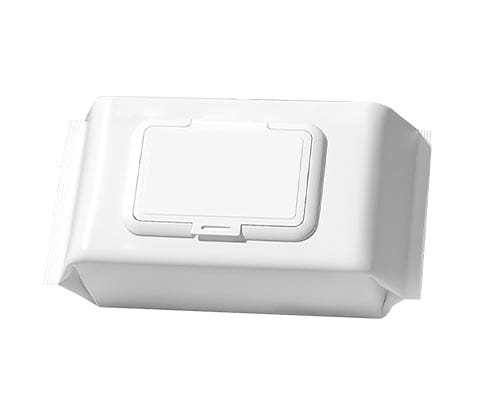
Step 8: Request Samples Before Bulk Production
Never treat sampling as an unnecessary step.
The sample allows you to check whether the product actually matches the concept you developed.
Review the sample for:
- Softness
- Strength
- Sheet size
- Thickness
- Moisture level
- Fragrance
- Liquid distribution
- Cleaning performance
- Skin feel where applicable
- Folding
- Dispensing
- Packaging quality
- Seal integrity
If you already have a reference product, sending a physical sample to the manufacturer can make communication much easier.
Instead of saying “I want a thicker wipe,” you can provide a reference product and explain which characteristics you want to reproduce or improve.
The approved sample should eventually become the reference point for the production specification.
Step 9: Understand MOQ
MOQ means Minimum Order Quantity.
For private label wipes, MOQ is influenced by more than the number of finished packs you want to purchase.
It can depend on:
- Wipe material
- Formula
- Sheet size
- Pack count
- Packaging format
- Custom printing
- Packaging materials
- Number of SKUs
- Production requirements
For example, producing several different packaging designs can require separate packaging materials and printing runs even when the total number of wipes is relatively large.
This is why asking only “What is your MOQ?” does not always give you enough information.
A better inquiry should include your estimated quantity, product type, sheet size, pack count, packaging preference, target market, and customization requirements.
Step 10: Compare Manufacturers Beyond Price
Price matters, but it should not be the only factor when selecting a private label wipes supplier.
A supplier should be able to manufacture the product consistently after the sample has been approved.
Consider these areas when comparing manufacturers:
| Evaluation area | What to check |
|---|---|
| Manufacturing capability | Can the factory produce your required wipe type? |
| Material options | Can the substrate meet your requirements? |
| Customization | Can specifications and packaging be adjusted? |
| Quality control | How are raw materials and finished products inspected? |
| Sample development | Can the manufacturer develop and revise samples? |
| Documentation | Can required product documentation be provided? |
| Production capacity | Can the factory support expected order volumes? |
| Communication | Are specifications and changes clearly documented? |
| Export experience | Does the supplier understand your target market? |
A slightly higher unit price may be worthwhile if it comes with better consistency, quality control, communication, and production reliability.
Step 11: Confirm Quality Control
Once the sample is approved, make sure the manufacturer has clear quality requirements for mass production.
Important checkpoints may include:
Raw materials: Are the approved materials clearly specified?
Formula: Is the approved formulation documented?
Dimensions: Are sheet size, weight, and thickness controlled?
Moisture: Is the liquid level consistent?
Packaging: Are seals, lids, printing, and dispensing checked?
Finished products: Are finished packs inspected before shipment?
Quality control should connect the approved sample with the actual production specification.
This is especially important when you plan to reorder the same product. Your second production run should be consistent with the first rather than becoming a completely new version of the product.
Step 12: Check Market-Specific Requirements
Your target market should be considered before finalizing the formula, product claims, and packaging.
Wipes do not all fall under the same regulatory category.
For example, the FDA explains that wipes intended for personal cleansing may be regulated as cosmetics, while wipes intended for therapeutic purposes may be regulated as drugs. Wipes intended to disinfect or sanitize hard surfaces are regulated by the EPA.
For disinfecting wipes sold in the United States, the EPA’s information on registered disinfectants provides guidance on registration numbers, product labels, and directions for use.
This distinction matters because a brand should not assume that every type of “wet wipe” follows the same regulatory requirements.
If you are planning international distribution, discuss the target countries with your manufacturer before finalizing product claims and packaging.
Step 13: Be Careful With Sustainability Claims
Sustainability is becoming increasingly important in wipe product development, but environmental claims should be specific and supportable.
Terms such as:
- Biodegradable
- Compostable
- Plastic-free
- Plant-based
- Eco-friendly
- Sustainable
should not be used simply because they sound attractive on packaging.
For example, the U.S. Federal Trade Commission’s Green Guides explain that environmental marketing claims should be supported by competent and reliable evidence, and broad unqualified claims such as “eco-friendly” can be difficult to substantiate.
For a private label brand, it is better to identify the specific material or environmental attribute behind a claim than to make a broad statement without supporting evidence.
How Long Does It Take to Launch Private Label Wipes?
The timeline depends on how much customization is required.
A project using an existing product specification can generally move faster than one requiring a new substrate, custom formulation, new packaging, and additional testing.
The overall workflow normally looks like:
Product concept → Specification → Quotation → Sample → Sample approval → Artwork → Production → Quality inspection → Shipment
Delays often happen when specifications and artwork are repeatedly changed after sampling.
The more clearly the product requirements are defined at the beginning, the easier it is to keep the project moving.
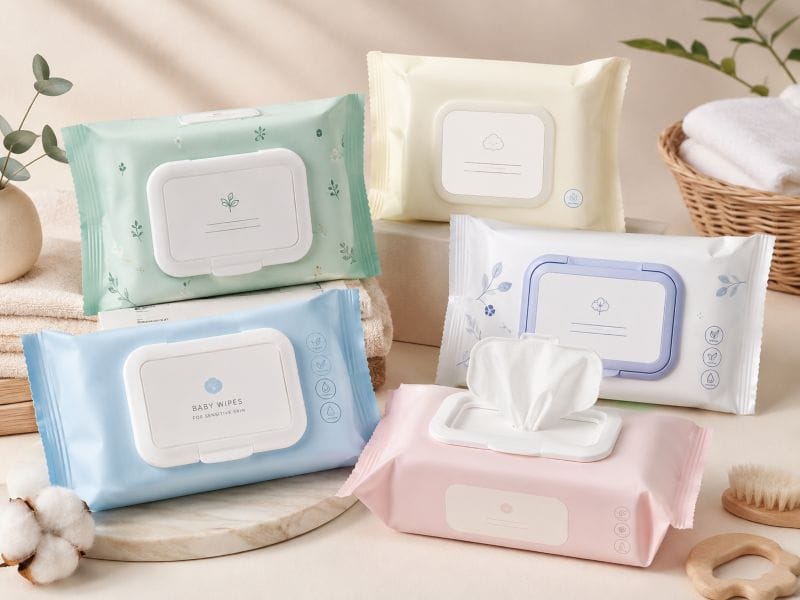
What Should You Send to a Private Label Wipes Manufacturer?
You do not need a complicated technical document to make your first inquiry.
Try to provide:
- Product type
- Target market
- Intended application
- Approximate sheet size
- Sheets per pack
- Preferred packaging
- Estimated order quantity
- Material preference
- Formula requirements
- Reference product, if available
- Expected launch date
If some specifications are not decided yet, explain that clearly.
A capable manufacturer should be able to help you determine practical options instead of expecting you to know every technical specification before the first conversation.
Common Mistakes When Starting a Private Label Wipes Brand
Choosing a supplier only because of the lowest price
A low quotation does not necessarily mean a lower total cost. Inconsistent materials, packaging defects, or failed production can increase costs later.
Designing packaging before finalizing the product
Sheet size, count, folding method, and packaging structure should be confirmed before final artwork.
Launching too many SKUs
A large product range can increase inventory pressure and make it harder to determine which products customers actually want.
Skipping proper sample evaluation
The sample should be checked against specific product requirements instead of being approved simply because it looks acceptable.
Ignoring the target market
Product claims and labeling requirements can vary depending on the intended use and market.
Focusing only on factory price
Material quality, MOQ, packaging, shipping, quality control, and production consistency all contribute to the real cost of a private label product.
Private Label Wipes Launch Checklist
Before placing your first production order, confirm the following:
| Item | Status |
|---|---|
| Product category | Confirmed |
| Target customer | Confirmed |
| Target market | Confirmed |
| Wipe material | Confirmed |
| Sheet size | Confirmed |
| GSM / thickness | Confirmed |
| Formula | Confirmed |
| Fragrance | Confirmed |
| Sheet count | Confirmed |
| Packaging format | Confirmed |
| Artwork | Approved |
| MOQ | Confirmed |
| Production specification | Approved |
| Sample | Approved |
| Quality requirements | Confirmed |
| Required documentation | Confirmed |
| Delivery requirements | Confirmed |
If several of these points are still undecided, it is usually better to resolve them before committing to a large production order.
Final Thoughts
Starting a private label wipes brand becomes much more manageable when you treat product development as a complete process rather than simply adding your logo to an existing package.
Start with a clear target customer and product purpose. Then build the material, formula, sheet specification, packaging, quality requirements, and production plan around that purpose.
Whether you are developing baby wipes, facial cleansing wipes, feminine hygiene wipes, or household cleaning wipes, the right manufacturing partner can help turn an initial product idea into a repeatable commercial product.
If you already have a product concept, reference sample, or packaging idea, the next step is to turn those ideas into a clear specification and discuss them with a private label wipes manufacturer before moving into bulk production.