When buying wet wipes for a private label brand, understanding how the products are manufactured can help you make better decisions about materials, quality, packaging, and production.
A finished pack of wet wipes may look simple, but the manufacturing process involves several coordinated steps. The nonwoven substrate must be selected, the liquid formulation prepared, the wipes cut and folded, and the finished product packaged in a way that helps retain moisture and protect quality.
For brands developing custom products, understanding these steps also makes it easier to communicate with a wet wipes manufacturer and evaluate whether a supplier can meet your requirements.
Table of Contents
What Are Wet Wipes Made Of?
Most wet wipes consist of two primary components: a nonwoven substrate and a liquid formulation.
The substrate provides the physical structure of the wipe, while the formulation provides the cleansing, moisturizing, disinfecting, or other intended function.
Depending on the product, the substrate may use materials such as rayon, cotton, polyester, polypropylene, wood pulp, or combinations of different fibers.
The U.S. Food and Drug Administration notes that disposable wipes can be made from a variety of materials and that regulatory treatment depends partly on the intended use of the product. FDA guidance on disposable wipes provides further information for manufacturers and businesses selling wipes in the United States.
The material needs to be selected according to the application rather than simply choosing the cheapest available substrate.
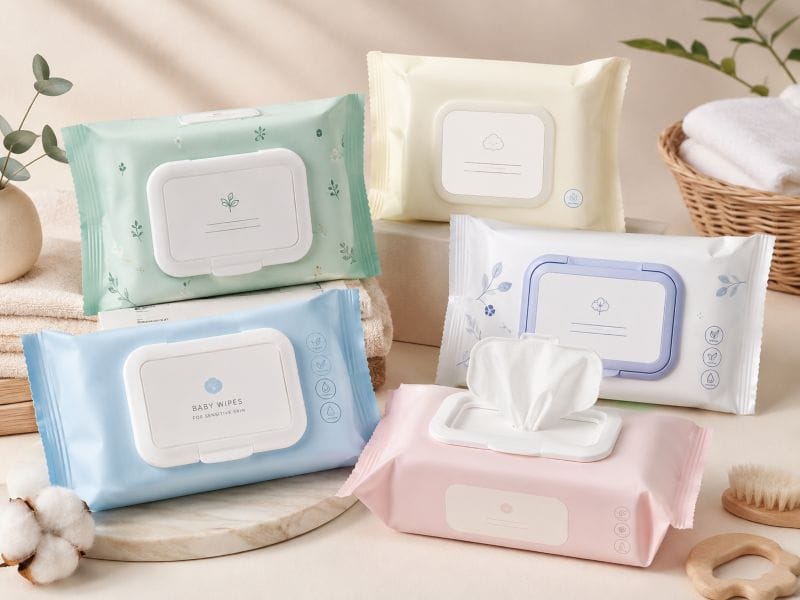
The Wet Wipes Manufacturing Process
Although production methods vary between manufacturers and product types, the basic process can be understood through several key stages:
Material preparation → Liquid preparation → Impregnation → Cutting → Folding → Packaging → Quality inspection → Cartoning
Each stage can affect the final product.
A problem with the substrate can affect softness or strength. An issue with the formulation can affect moisture and shelf life. Poor packaging can cause the wipes to dry out before they reach the customer.
That is why quality control needs to cover the complete manufacturing process rather than only the finished package.
Step 1: Selecting the Nonwoven Substrate
The manufacturing process starts with the wipe material.
The substrate needs to provide the right combination of:
- Softness
- Strength
- Absorbency
- Thickness
- Texture
- Liquid retention
- Cost
Different wipes have different priorities.
A baby wipe may require a soft and gentle substrate, while a household cleaning wipe may need greater strength when wiping a hard surface.
For example, Beierjie’s Baby Cleansing Wipes are designed for personal care applications, while its Household Cleaning Wipes serve different cleaning requirements.
For private label projects, the substrate should therefore be discussed together with the intended application, rather than selected independently.
Step 2: Preparing the Liquid Formulation
The second major component is the liquid solution.
Depending on the product, the formulation can be designed for:
- Personal cleansing
- Facial cleansing
- Baby care
- Feminine hygiene
- Household cleaning
- Degreasing
- Surface disinfection
A personal care wipe may focus on skin feel and cleansing, while a household cleaning wipe may require ingredients designed for a specific cleaning function.
The liquid formulation also needs to work with the selected substrate. A formulation that performs well on one material may not necessarily produce the same result on another.
For private label products, manufacturers may offer existing formulations or develop customized solutions according to the project requirements.
Step 3: Combining the Substrate With the Liquid
Once the substrate and formulation are ready, the dry nonwoven material is saturated with the liquid solution.
The amount of liquid needs to be controlled carefully.
Too little moisture can result in a wipe that feels dry or does not perform as expected.
Too much liquid can make the package messy, affect handling, or create packaging and transportation problems.
Consistent liquid distribution is therefore an important part of production quality.
The target moisture level can vary depending on the wipe type, material, sheet size, formulation, and packaging.
Step 4: Cutting the Wipes to Size
After the substrate has been prepared, the continuous material is converted into individual wipe sheets.
Sheet dimensions need to match the approved product specification.
Common specifications include:
| Specification | Why it matters |
|---|---|
| Length and width | Determines the usable wiping area |
| GSM | Affects material weight and feel |
| Thickness | Influences softness and durability |
| Sheet count | Determines quantity per package |
| Folding format | Affects dispensing and packaging |
| Texture | Influences cleaning and user experience |
A larger sheet is not automatically better.
For example, a compact facial wipe may need a different format from a household cleaning wipe designed to cover a larger surface.
Step 5: Folding the Wipes
After cutting, the individual sheets are folded according to the packaging and dispensing requirements.
The folding method affects how easily consumers can remove the wipes from the package.
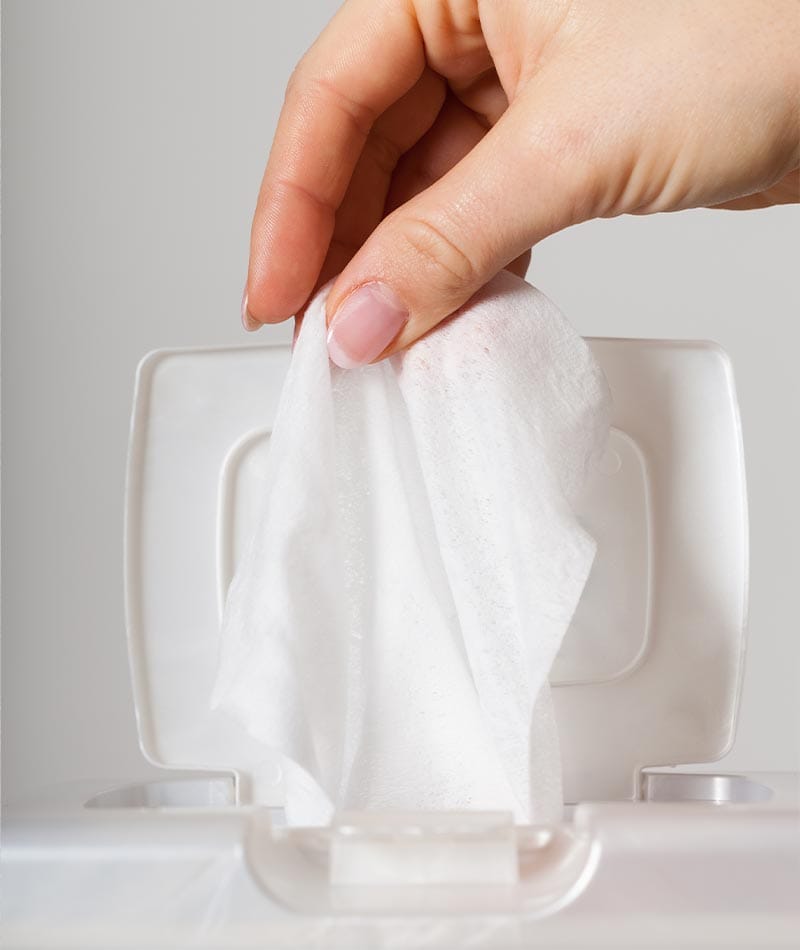
For a soft pack, the wipes need to be arranged so that they can be dispensed conveniently without creating unnecessary pulling or tearing.
For individually wrapped wipes, the folding format needs to fit the sachet dimensions.
This is one reason why sheet size and packaging should be developed together rather than as separate decisions.
Step 6: Filling and Packaging
Once the wipes are cut and folded, they are placed into the selected packaging.
Common formats include:
- Soft packs
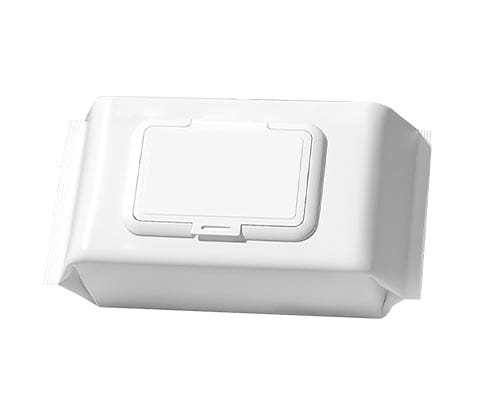
- Packs with flip-top lids
- Resealable packs
- Individual sachets
- Other customized formats
Packaging has a technical purpose beyond branding.
Wet wipes contain a liquid formulation, so the packaging needs to help prevent moisture loss and protect the product during transportation and storage.
Packaging quality can influence the shelf life and user experience of the finished product.
For brands developing a custom product, Beierjie’s wet wipes product range includes personal care and household cleaning applications that can be developed around different product requirements.
Step 7: Sealing the Package
After filling, the package is sealed.
The sealing process needs to create a reliable barrier while maintaining the functionality of the package.
For resealable packs, the opening and closing mechanism is particularly important because consumers may open the package many times during normal use.
A package can look attractive while still performing poorly if the seal or closure does not maintain moisture effectively.
Quality inspection should therefore include both the visual appearance and functional performance of the package.
Step 8: Printing and Labeling
Private label wipes require packaging that communicates the brand and product information clearly.
Depending on the market and product category, packaging may need to include information such as:
- Product name
- Intended use
- Ingredient information where applicable
- Net quantity
- Manufacturer information
- Directions for use
- Warnings where required
- Batch or lot information
Labeling requirements vary according to the product and market.
For products sold in the United States, businesses should review the relevant requirements before finalizing packaging artwork. The FDA provides resources covering cosmetic labeling requirements for products that fall within the cosmetic category.
If the wipes are marketed for disinfecting purposes, additional regulatory requirements may apply. The U.S. Environmental Protection Agency’s disinfectant resources explain requirements surrounding registered disinfectant products.
This is particularly important because a cleansing wipe and a disinfecting wipe should not automatically be treated as the same type of product from a regulatory perspective.
Step 9: Quality Inspection
Quality control should take place throughout production rather than only at the end.
Manufacturers may inspect factors such as:
Raw materials: Are the approved materials being used?
Dimensions: Do the wipes match the agreed size?
Weight: Is the product within the specified tolerance?
Moisture: Is the liquid level consistent?
Appearance: Are the wipes free from obvious defects?
Packaging: Are seals, lids, printing, and dispensing working correctly?
Finished goods: Do the final packs meet the approved specification?
The exact testing program depends on the product.
For private label brands, it is important to establish the acceptance criteria before mass production begins. This gives both the buyer and manufacturer a clear reference point.
Step 10: Cartoning and Shipment
After inspection, finished packs are normally packed into shipping cartons.
Carton specifications need to account for:
- Pack dimensions
- Number of packs per carton
- Gross weight
- Carton strength
- Shipping requirements
- Storage conditions
Efficient carton design can also help reduce wasted space during transportation.
For international buyers, shipping should be considered early in product development because packaging dimensions and carton configuration can influence the overall logistics cost.
How Does Private Label Manufacturing Differ From Standard Wet Wipes?
The basic manufacturing process may be similar, but private label products typically involve additional customization.
A standard product may already have:
- Established substrate
- Existing formulation
- Standard packaging
- Existing artwork
- Established production settings
A private label project may involve changes to one or more of these elements.
| Product element | Standard product | Private label product |
|---|---|---|
| Brand | Manufacturer’s or existing brand | Buyer’s brand |
| Material | Usually established | Can be customized |
| Formula | Existing | Existing or customized |
| Sheet size | Standard | Can be customized |
| Packaging | Standard | Custom options available |
| Artwork | Existing | Buyer-provided or developed |
| Product positioning | Established | Developed for target market |
The more elements you customize, the more important it becomes to confirm specifications before production.
How Long Does Wet Wipes Manufacturing Take?
There is no universal production timeline.
A standard product using established materials and packaging can usually move through production more simply than a completely customized product.
A private label project may include additional stages such as:
Product development → Sample preparation → Sample approval → Packaging artwork → Packaging production → Bulk manufacturing → Quality inspection → Shipment
Delays often happen before actual production begins.
For example, changing the artwork several times or modifying the product specification after sample approval can push back the production schedule.
Providing complete information at the beginning can help reduce unnecessary delays.
What Should Buyers Check Before Production?
Before approving mass production, make sure the manufacturer has documented the final specification.
At minimum, confirm:
| Item | What to verify |
|---|---|
| Material | Exact substrate and GSM |
| Formula | Approved formulation |
| Sheet size | Length and width |
| Sheet count | Number of wipes per pack |
| Folding | Approved folding method |
| Packaging | Material and format |
| Artwork | Final approved artwork |
| Carton | Packs per carton |
| Quality | Acceptance requirements |
| Quantity | Confirmed production quantity |
For a new private label project, this step can prevent many avoidable problems.
If you are also evaluating production quantity, see our guide to Wet Wipes MOQ to understand how material, packaging, SKUs, and customization can affect minimum order requirements.
Can Wet Wipes Be Customized?
Yes. The level of customization depends on the manufacturer’s capabilities and the product requirements.
Possible customization areas can include:
- Material
- GSM
- Sheet dimensions
- Texture
- Formula
- Fragrance
- Number of sheets
- Folding
- Packaging
- Printing
- Carton configuration
However, customization should always serve a specific product objective.
Changing every component simply to make a product “different” can increase complexity without creating meaningful value for customers.
A better approach is to identify the characteristics that matter most to your target market and customize those areas first.
What Makes a Good Wet Wipes Manufacturer?
The manufacturing process is only as reliable as the systems behind it.
When evaluating a supplier, look beyond the quoted unit price.
Consider:
- Material sourcing
- Production equipment
- Product development capability
- Formula options
- Packaging capabilities
- Quality control
- Production capacity
- Documentation
- Export experience
- Communication
A good supplier should be able to explain how your specifications will be translated into production and how consistency will be maintained between batches.
For businesses starting a new private label wipes brand, this is often more important than simply finding the lowest quotation.
Final Thoughts
Wet wipes may look like a simple consumer product, but manufacturing involves a series of carefully controlled steps.
The substrate, formulation, moisture level, cutting, folding, packaging, sealing, and quality inspection all contribute to the performance of the finished product.
For private label brands, understanding the manufacturing process makes it easier to communicate product requirements and evaluate potential suppliers.
If you are developing a new wipes product, start by defining the application, target customer, material, formula, sheet specification, packaging, and expected order quantity. From there, an experienced manufacturer can help turn those requirements into a production-ready product.
Beierjie supports customized wipes production across personal care and household cleaning applications. If you have a product concept or reference sample, contact Beierjie to discuss your specifications and develop a suitable manufacturing solution.