Table of Contents
- Why This Matters for Wet Wipes Buyers
- Which Products May Be Affected
- Material Choices and Plastic Content
- Packaging Artwork and Label Placement
- Documents to Request From an OEM Manufacturer
- Material and Labeling Comparison
- Common Mistakes to Avoid
- FAQs
For brands importing personal care wipes into the European market, packaging is no longer only a design decision. It is also a compliance and buyer-confidence issue. The EU wet wipes marking requirements affect how many wet wipe products should be labeled, what information should be visible on pack, and how procurement teams should brief their OEM manufacturer before artwork is approved.
This guide explains the practical packaging questions behind the EU wet wipes marking requirements without turning the topic into legal jargon. It is written for importers, private label brands, distributors, and product managers who need to prepare wet wipes, baby wipes, facial wipes, feminine hygiene wipes, or other pre-moistened personal care wipes for European channels.
Why This Matters for Wet Wipes Buyers
The EU wet wipes marking requirements are connected to the wider European effort to reduce the environmental impact of certain single-use plastic products. A documented EU wet wipes marking requirements review also helps private label buyers keep packaging, claims, and supplier files aligned. The European Commission marking specifications explain that certain single-use plastic products must carry markings to help reduce environmental harm. For wet wipes, the key question is whether the wipe contains plastic and whether the consumer needs clear disposal guidance.
A package that looks attractive but misses required marking can create delays at artwork approval, customs review, retail onboarding, or distributor quality checks. For OEM buyers, the risk often appears late. A brand may finish formula development, approve the nonwoven fabric, print sample packaging, and only then discover that the label does not match the market requirement. Building the EU wet wipes marking requirements into the first packaging brief is usually easier than correcting printed film, stickers, cartons, or product pages later.
Which Products May Be Affected
The EU wet wipes marking requirements mainly concern pre-wetted personal care and domestic-use wipes that fall under the single-use plastic rules. This can include certain baby wipes, cosmetic wipes, cleansing wipes, feminine hygiene wipes, and household wipes if the material composition brings them into scope. A basic wet wipe definition also shows why the category covers several different end uses rather than one single product.
Not every wipe should be treated the same way. A dry disposable face towel, a boxed facial tissue, and a pre-moistened wipe can have different regulatory and labeling considerations. A surface disinfectant wipe may also need separate chemical or biocidal labeling review. That is why a good OEM packaging brief should define the product type, intended use, destination market, substrate composition, liquid formula, and claim language before the EU wet wipes marking requirements are reviewed.
Material Choices and Plastic Content
Material selection is one of the first questions behind the EU wet wipes marking requirements. Many conventional wet wipes use nonwoven blends that may include synthetic fibers, binders, or plastic-containing components. Other projects use viscose, lyocell, cotton, bamboo-derived fibers, or other plant-based substrates to support a more sustainability-focused product position.
Buyers should avoid assuming that words such as ?natural,? ?plant-based,? ?eco,? or ?biodegradable? automatically settle the EU wet wipes marking requirements. The exact fiber composition, chemical modification, binder system, and finished product structure matter. Ask the manufacturer for a written material specification and confirm whether the wipe, packaging film, label, lid, and disposal claims are being evaluated separately.
Packaging Artwork and Label Placement
The EU wet wipes marking requirements are not only about whether a sentence appears somewhere on the package. Placement, visibility, language, symbol use, and the relationship between marketing claims and disposal instructions all need attention. If the wet wipe is in scope, the required marking should not be hidden behind a resealable label, covered by a sticker, placed where the consumer is unlikely to notice it, or contradicted by a vague environmental claim.
For private label packaging, the artwork workflow should include a compliance review stage before mass printing. Treat the EU wet wipes marking requirements as part of artwork development, not as a final proofreading item. This is especially important for flow packs, canisters, travel packs, multipacks, refill packs, and carton displays. A small travel pack has limited space, so the EU wet wipes marking requirements must be considered early alongside the brand logo, ingredients, barcode, batch code, instructions, caution statements, and importer information.
Documents to Request From an OEM Manufacturer
A reliable OEM partner should help the buyer collect the information needed for review, even if final legal responsibility depends on the importer, brand owner, and destination market. When discussing the EU wet wipes marking requirements, request documents that support artwork decisions rather than relying on a short sales answer.
Useful documents may include the nonwoven material specification, fiber composition statement, product specification sheet, packaging material details, artwork dieline, ingredient list, safety data or formula information where applicable, and packaging samples for review. For flushable wipes, buyers should also ask about flushability testing standards and disposal labeling. The EDANA flushability guidance is useful background because flushability and the EU wet wipes marking requirements are related but not identical topics.
Material and Labeling Comparison
| Project choice | Buyer question | Packaging implication | OEM action |
|---|---|---|---|
| Conventional synthetic blend | Does the wipe contain plastic? | May need clear marking and disposal guidance | Provide composition and artwork review support |
| Plant-based nonwoven | Is the material fully plastic-free in the finished wipe? | Claims must match actual material evidence | Provide substrate specification and supplier documents |
| Flushable wipe | Does it meet accepted flushability guidance? | Disposal claims need evidence, not wording alone | Discuss testing route and claim limitations |
| Travel pack | Is there enough label space? | Marking, warnings, barcode, and importer details compete for room | Check dieline before sample film is printed |
| Private label refill pack | Will it be sold alone or inside a multipack? | Outer and inner packs may need separate review | Review both pack levels before mass production |
How the Rules Affect Private Label Wet Wipes
Private label buyers often manage several products at once: baby wipes, makeup remover wipes, cleaning wipes, feminine wipes, and wet toilet wipes. The EU wet wipes marking requirements should not be handled as a single copy-and-paste label across all SKUs. Each SKU may use different materials, formulas, pack sizes, and claims.
A practical approach is to create a compliance checklist for each product before artwork approval. The checklist should include material composition, product category, use instructions, disposal wording, claim substantiation, importer details, and language requirements for the target market. This makes the EU wet wipes marking requirements part of the normal OEM development process instead of a last-minute problem.
What to Consider for Biodegradable and Plastic-Free Claims
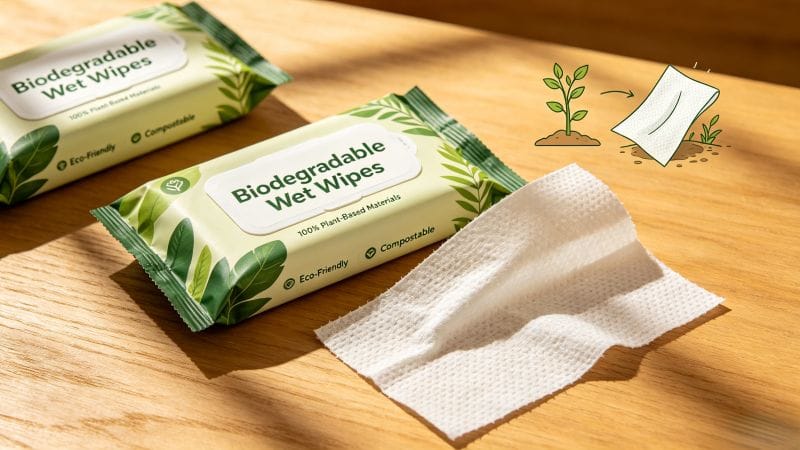
Sustainability claims can help a product stand out, but they also increase scrutiny. If a buyer wants biodegradable wet wipes, plastic-free wet wipes, compostable packaging, or plant-based wipes, the claim should be supported by real material information and reviewed against the destination market rules. The EU wet wipes marking requirements do not disappear simply because a package uses green design language.
For safer communication, keep claims specific. Instead of using broad phrases such as ?eco-friendly? without support, describe the substrate type, packaging option, and disposal instructions accurately. When evidence is still being collected, use neutral wording in the draft artwork and ask the manufacturer what documents can be supplied for the EU wet wipes marking requirements review.
How Beierjie Supports OEM Packaging Projects
Beierjie supports OEM and private label wet wipes projects with material selection, packaging format discussion, artwork coordination, and production planning. For brands targeting Europe, we can help organize product specifications and packaging information so your team can review the EU wet wipes marking requirements with your compliance advisor or importer before mass production.
Our role is to make the manufacturing side clearer: substrate options, wipe size, liquid ratio, folding style, pack format, lid or label options, carton packing, and sample development. When these details are defined early, buyers can make better decisions about the EU wet wipes marking requirements and reduce the risk of redesigning packaging late in the project.
FAQs
Do all wet wipes sold in Europe need the same marking?
No. The EU wet wipes marking requirements depend on product type, material composition, intended use, and whether the wipe falls under the relevant single-use plastic rules. Buyers should review each SKU separately.
Can biodegradable wet wipes avoid EU marking automatically?
Not automatically. Biodegradable or plant-based wording does not replace a material and regulatory review. The EU wet wipes marking requirements should be checked against the finished wipe and the actual evidence available.
Are flushable wipes covered by the same rules?
Flushable wipes need special attention because disposal claims can create additional expectations. Review flushability guidance, test evidence, and the EU wet wipes marking requirements before approving packaging.
What should I ask my OEM manufacturer before printing packaging?
Ask for the material specification, fiber composition, formula or ingredient information, packaging dieline, pack format details, and sample artwork review support. These details help your team evaluate the EU wet wipes marking requirements earlier.
Can Beierjie confirm legal compliance for my target market?
Beierjie can support the manufacturing and documentation side of your OEM project, but final legal compliance should be reviewed by the importer, brand owner, or a qualified market compliance advisor.
Request OEM Support for Europe-Ready Wet Wipes Packaging
If you are developing private label wet wipes for European retail, distribution, hospitality, or personal care channels, contact Beierjie to discuss material options, pack formats, artwork requirements, and sample development. We can help you prepare the manufacturing details your team needs before packaging is approved.