Wet wipes sample testing should answer one practical question: is this sample good enough to become the reference standard for mass production?
For importers, distributors, retailers, and private label brands, approving a wet wipes sample based only on softness or appearance is risky. The sample also needs to be evaluated for material, dimensions, liquid loading, formula, dispensing, packaging seals, labeling, and its suitability for the intended market.
The requirements also change according to the type of wipe. A sample developed for baby cleansing should not be evaluated in exactly the same way as a household cleaning or disinfecting wipe. The U.S. Food and Drug Administration (FDA), for example, explains that wipes intended for cleansing or moisturizing skin may be regulated as cosmetics, while wipes intended to disinfect or sanitize inanimate surfaces fall under U.S. Environmental Protection Agency (EPA) oversight. This makes intended use one of the first issues to settle before approving a sample.
Beierjie currently supplies several wipe categories, including Baby Cleansing Wipes, Disinfecting Wipes, Kitchen Degreasing Wipes and other disposable hygiene products, while its OEM service covers customizable materials, formulas, sizes, packaging and branding. A sample should therefore be reviewed against the exact specification being purchased rather than against a generic definition of a “good wet wipe.”
Table of Contents
Why Sample Approval Matters Before a Bulk Wet Wipes Order
A development sample is more than a demonstration product.
Once approved, it may become an important reference for the production order. If the buyer approves the sample without documenting what has actually been accepted, disagreements can arise later when mass-produced goods are inspected.
For example, “the wipe should feel soft” is subjective.
A stronger specification identifies the material, sheet dimensions, pack count, formula version, packaging format and other measurable or identifiable requirements.
The Sample Should Represent the Agreed Product
Before approving a sample, confirm whether it was made using the same intended material, formula and packaging configuration as the planned production order.
A manually prepared development sample may be useful for evaluating an early concept, but buyers should understand which characteristics will remain identical in production and which may still change.
Ask the supplier directly if the sample represents:
- final material;
- final formula;
- final sheet dimensions;
- final fold;
- final liquid specification;
- final packaging structure;
- final closure;
- or only an early development version.
This distinction prevents a prototype from being mistaken for a production reference.
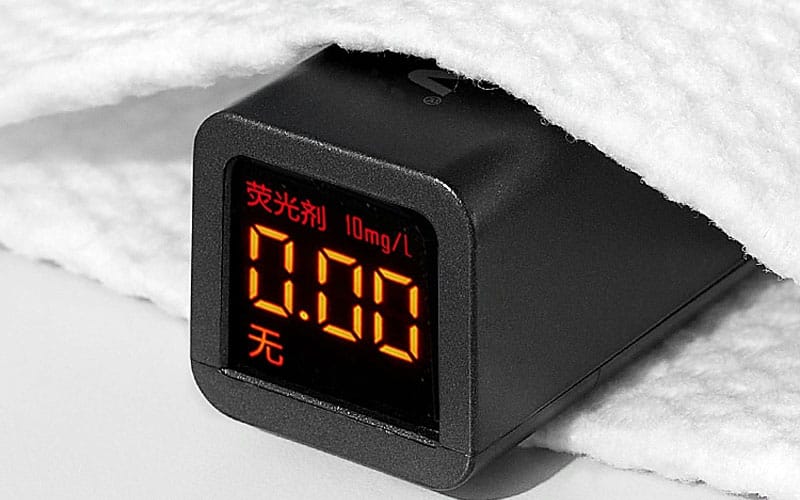
What Should Be Included in Wet Wipes Sample Testing?
The exact test plan depends on the wipe category and target market, but most purchasing teams should evaluate several fundamental areas.
| Sample Check | What to Evaluate | Why It Matters |
|---|---|---|
| Wipe material | Composition and agreed material specification | Influences feel, strength and positioning |
| Sheet dimensions | Length and width | Confirms product specification |
| Sheet count | Actual wipes per pack | Prevents quantity discrepancies |
| Liquid loading | Moisture against agreed requirement | Influences cleaning experience |
| Formula | Approved formula or ingredient specification | Important for labeling and intended use |
| Wipe strength | Behavior during intended use | Helps assess application suitability |
| Dispensing | Whether sheets separate and dispense properly | Affects customer experience |
| Pack seal | Leakage and seal integrity | Helps retain product condition |
| Resealable closure | Label or lid performance | Important after opening |
| Printing | Artwork, barcode and required text | Prevents packaging errors |
| Carton | Protection and packing configuration | Important for transport and warehousing |
This checklist should be adapted rather than treated as a universal standard.
A baby cleansing wipe intended for skin contact, for example, raises different formulation and labeling questions from a surface cleaning wipe.
Start by Confirming the Intended Use
Before evaluating formulation or performance, establish exactly what the product is intended to do.
This matters because the intended use can affect both the appropriate test criteria and regulatory pathway.
The FDA notes that disposable wipes used for baby care, personal cleansing and similar skin-cleansing purposes may be cosmetics. Wipes intended for therapeutic purposes can fall under drug requirements, while wipes intended to disinfect or sanitize inanimate surfaces are regulated by the EPA in the United States.
This means buyers should avoid developing the physical product first and deciding the claims later.
Define the Product Before Testing It
Your sample brief should identify whether the product is intended as:
baby cleansing wipes, personal cleansing wipes, makeup-removal wipes, household cleaning wipes, kitchen degreasing wipes, or another defined category.
If antimicrobial or disinfecting claims are planned, those claims require separate regulatory attention and supporting evidence appropriate to the destination market.
The wording printed on packaging is therefore not merely a marketing decision.
How Should You Evaluate Wet Wipe Material?
The substrate determines much of the physical user experience.
FDA’s disposable wipes guidance notes that cleansing wipes may use materials such as polyester, polypropylene, cotton, wood pulp or rayon fibers formed into sheets.
For a private label project, however, knowing the general material category is not enough.
Confirm What Material Was Actually Sampled
Ask the supplier to identify the material specification used for the sample.
If your order depends on a particular fiber composition or environmental positioning, make sure the supporting specification matches what will be used during mass production.
Do not infer composition from texture alone.
Two wipes can feel similar while using different substrate structures.
Measure the Sheet
Confirm length and width rather than relying on catalogue descriptions.
If the product specification includes a particular sheet size, record it as part of sample approval.
For future repeat orders, the documented dimensions provide a much clearer reference than “same size as last time.”
Evaluate Strength Under the Intended Use
Testing should reflect the product application.
For a baby wipe, buyers may prioritize softness and adequate wet strength during gentle cleansing.
For a Kitchen Degreasing Wipe, the required substrate behavior may be different because the wipe is intended for surface cleaning rather than baby care.
Do not simply request the thickest or strongest material available. The material should fit the intended application and product positioning.
How Do You Check Moisture and Liquid Loading?
Moisture is one of the easiest differences for customers to notice.
A wipe that is significantly drier than the approved sample can feel less effective. Excess liquid can also affect dispensing, handling or packaging depending on the product.
The solution is to define an agreed liquid specification rather than relying entirely on subjective descriptions such as “wet enough.”
Check More Than the First Wipe
When evaluating a multi-sheet pack, do not judge moisture from only the top sheet.
Check wipes from different positions in the sample pack where practical.
The objective is to understand whether the product provides a reasonably consistent experience throughout the pack.
Watch for Leakage
Turn and handle the sealed sample pack as it might be handled during storage and transport.
Visible leakage should be investigated before approval.
If the pack is intended for international shipping, packaging performance deserves particular attention because products may experience extended storage and handling before reaching the final customer.
How Should the Formula Be Reviewed?
Formula review should happen before mass production, particularly when the product will be sold under the buyer’s brand.
FDA explains that cleansing wipes may contain water along with cleansing agents, moisturizers and preservatives, among other ingredients. Preservatives can play an important role in limiting bacterial and mold growth in the product.
The buyer should therefore request the relevant formulation information rather than approving a sample solely on scent and feel.
Check Ingredient and Claim Alignment
If packaging will state that a product is fragrance-free, sensitive-skin oriented or has another formulation-related characteristic, make sure the actual formula supports that statement.
FDA specifically distinguishes “unscented” from “fragrance-free”: an unscented cosmetic may still contain masking fragrance ingredients, while a product represented as fragrance-free should not contain added fragrance ingredients.
This is a good example of why marketing language and formulation cannot be managed separately.
Do Not Change the Formula After Approval Without Review
Once a formula has been approved, any meaningful ingredient change should trigger another review.
The change may affect labeling, product stability, claims or the customer’s experience.
For repeat private label orders, formula version control can therefore be as important as packaging artwork version control.
Should Wet Wipes Be Checked for Microbiological Quality?
For skin-cleansing wipes, microbiological quality is a legitimate part of product safety consideration.
FDA maintains specific resources on microbiological safety for cosmetics and its Bacteriological Analytical Manual includes methods for cosmetics. The April 2024 revision specifically added protocols for analyzing wet wipes, and the current July 2024 edition retains wet-wipe analysis within the methods.
This does not mean every buyer should invent their own microbiological limits or laboratory method.
Instead, determine what testing and documentation are appropriate for the product category and destination market, and confirm these requirements with the manufacturer before production.
Ask What Testing Applies to Your Product
Useful questions include:
What microbiological testing is performed?
At what stage is it performed?
Which test method is used?
What acceptance criteria apply?
Is the test performed internally or by an external laboratory?
What report or batch documentation will be available?
The answers should be evaluated against the requirements of the actual product and destination market.
How Should Disinfecting Wipe Samples Be Evaluated Differently?
A disinfecting wipe cannot be evaluated simply by checking whether the wipe smells like disinfectant or contains alcohol.
Claims matter.
For products marketed as surface disinfectants in the United States, EPA registration and approved labeling requirements are central. EPA explains that antimicrobial products cannot make efficacy claims against specific pathogens unless the agency has reviewed supporting data and approved the claim on the label.
If you are developing Disinfecting Wipes, confirm the target market and intended claims before approving packaging or promotional language.
Contact Time Is Part of Product Performance
For registered surface disinfectants, contact time is the period during which the treated surface must remain visibly wet for the product to achieve the approved effect.
EPA explicitly instructs users to follow the label’s contact time and keep the surface visibly wet for that duration.
This means a disinfecting wipe sample should not be evaluated purely as a cleaning cloth.
Formula, liquid delivery, intended surface, efficacy claims and approved directions need to work together.
Cleaning and Disinfecting Are Not Automatically the Same Claim
A wipe may physically remove dirt without having an approved disinfecting claim.
Buyers should therefore separate general surface-cleaning performance from antimicrobial efficacy when developing the product specification.
This prevents ordinary cleaning performance from being incorrectly presented as verified disinfection.
How Should You Test Wet Wipe Dispensing?
Dispensing problems can turn an otherwise acceptable wet wipe into a frustrating finished product.
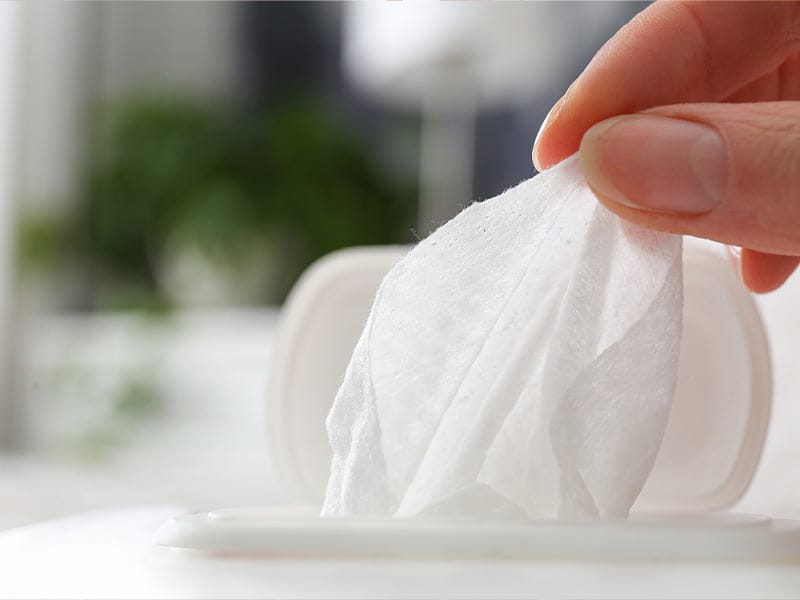
For soft packs and tubs, test how the wipes behave during repeated removal.
Check Sheet Separation
Pull several wipes in sequence.
Does one sheet dispense at a time?
Do several sheets come out together?
Does the next sheet remain accessible?
These practical details affect the customer experience but can easily be missed when buyers focus only on formulation.
Check Fold Consistency
The folding arrangement should work with the chosen packaging and dispensing opening.
If the fold or sheet dimensions change during mass production, dispensing behavior may also change.
For that reason, fold configuration can be part of the approved product specification when it is relevant to the package.
What Should You Check in Wet Wipes Packaging?
Packaging is part of the product’s functional system.
FDA advises consumers to keep wipe containers tightly closed to help prevent wipes from drying out.
For purchasing teams, that makes closure performance an obvious sample-checking point.
Test the Resealable Label
Open and close the label repeatedly.
Check whether it continues to adhere appropriately and whether the opening is practical for dispensing.
Test Flip-Top Closures Where Applicable
If a lid is used, inspect alignment, opening force and closure.
The lid should be evaluated together with the underlying package seal rather than in isolation.
Review Print and Artwork
For private label production, verify the correct artwork revision before mass printing.
Check the brand name, product name, ingredient information where applicable, directions, warnings, barcode, pack count and other required market information.
Regulatory labeling requirements depend on the product category and destination, so they should be checked before artwork approval.
When Is a Wet Wipes Sample Ready for Approval?
A sample is ready for approval when the characteristics important to the project have been checked, documented and agreed with the manufacturer.
Approval should not mean merely “the sample looks fine.”
A stronger approval records exactly what is being accepted.
Create an Approved Sample Specification
The approval record may include:
product category, substrate specification, sheet dimensions, sheet count, formula version, liquid requirement, fold, packaging format, closure, artwork version and any applicable test or documentation requirements.
Only include specifications that are actually relevant to the product.
Keep a Reference Where Practical
An approved physical sample can be useful as a visual and tactile reference, but it should be accompanied by written specifications.
A physical sample alone cannot reliably document every formulation, dimensional or compliance requirement.
What Changes Require a New Sample?
Not every minor production adjustment necessarily requires a completely new development program, but meaningful specification changes should be reviewed.
A new or revised sample may be appropriate when changing the substrate, formula, fragrance, wipe dimensions, fold, packaging material, closure or another characteristic that could affect product performance or customer experience.
Packaging artwork changes should also go through their own approval process.
The key principle is straightforward:
If the change could affect what the customer receives or what the label claims, do not assume the original sample approval automatically covers it.
What Should Be Confirmed Before Mass Production?
Before releasing an OEM order for production, connect the approved sample to a complete order specification.
Confirm the product type, intended use, substrate, sheet dimensions, formula, pack count, packaging format, branding, artwork version, carton configuration and agreed quality requirements.
For regulated claims, confirm the documentation required for the destination market before printing packaging.
If you are developing a new private label wipe with Beierjie, its published OEM service includes customization of materials, formulas, sizes, packaging and branding. Submit those requirements together rather than discussing each specification separately after sample development.
A clear RFQ can substantially reduce unnecessary sample revisions.
What Information Should You Send When Requesting a Wet Wipes Sample?
A useful sample request should explain what you intend to sell rather than simply asking the manufacturer to “send your best wipes.”
Provide the product category, intended use, destination market, preferred material, sheet dimensions, sheets per pack, formulation requirements, fragrance preference, packaging format, branding requirements and expected order structure.
If specific claims are important, state them at the beginning so the manufacturer can determine what formulation, documentation and regulatory considerations may apply.
For buyers considering Beierjie’s OEM and private label wet wipes range, providing these specifications upfront makes it easier to identify an appropriate starting product and determine which characteristics need customization.
Questions to Resolve Before Signing Off the Sample
Before approval, you should be able to answer several practical questions.
Does the sample use the intended production material?
Is the formula the version that will be produced?
Are the sheet dimensions and count correct?
Does the package dispense properly?
Does the closure continue to work after repeated opening?
Does the artwork accurately represent the product?
Are required testing and documentation requirements defined?
Can the manufacturer reproduce the approved specification in mass production?
If any important answer is still unclear, the sample may not yet be ready to become the production reference.
Conclusion
Wet wipes sample testing is the bridge between product development and mass production. A successful sample approval should verify more than softness, fragrance or appearance.
Importers, distributors, retailers and private label brands should evaluate the material, dimensions, formula, liquid loading, dispensing, packaging, artwork and applicable documentation according to the product’s intended use.
The requirements also need to reflect the actual wipe category. Baby cleansing wipes, household cleaning wipes and surface disinfecting wipes do not necessarily follow the same regulatory or performance framework.
The safest purchasing approach is to define the intended use first, test the sample against a written specification, resolve regulatory and labeling requirements before packaging approval, and then use the approved specification as the reference for production.
FAQ
How many wet wipes should I test before approving a sample?
There is no universal number for every project. The sampling approach should reflect the product, pack format, quality plan and characteristics being evaluated rather than relying on an arbitrary quantity.
Should I approve a wet wipe sample before the final packaging is ready?
You can approve product characteristics in stages, but final production approval should also cover the actual packaging configuration. Packaging can affect sealing, moisture retention, dispensing, labeling and the overall customer experience, so a product sample alone should not automatically approve the finished pack.
What is the most important thing to check in a private label wet wipes sample?
There is no single characteristic that applies to every wipe. Start by confirming the intended use, then check the substrate, sheet dimensions, formula, liquid loading, dispensing and packaging against the agreed specification. Claims and documentation should also match the destination market.
Does changing the wet wipe formula require another sample?
A meaningful formula change should normally be reviewed before mass production. Changes can affect product feel, fragrance, stability, labeling, claims or other characteristics. The revised formula should not automatically inherit approval from the original sample.
How can I make sure mass production matches the approved sample?
Use both an approved reference sample and a written production specification. Record the material, dimensions, formula version, pack count, liquid requirements, fold, packaging, artwork and other relevant criteria. If an important specification changes, establish a process for review and approval before production.