Wet wipes quality control is one of the most important parts of an OEM or private label sourcing project. A sample may look good during supplier evaluation, but professional buyers also need to know whether the manufacturer can reproduce the approved specifications consistently across thousands of packs and multiple production batches.
For importers, distributors, retailers, and private label brands, this is where supplier evaluation becomes more technical. Softness alone does not determine whether a wet wipe is suitable for commercial distribution. Buyers may also need to evaluate wipe dimensions, material consistency, liquid loading, formula requirements, packaging seals, dispensing performance, labeling, carton condition, and batch traceability.
A practical wet wipes quality control plan therefore begins before mass production rather than after the finished goods are ready.
This guide explains what B2B buyers should check from sample approval through mass production and pre-shipment inspection, as well as the questions worth discussing with an OEM wet wipes manufacturer before confirming an order.
Table of Contents
Why Wet Wipes Quality Control Should Start Before Production
One of the most common sourcing mistakes is treating quality inspection as the final step.
By the time finished cartons are ready for shipment, many important decisions have already been made. The nonwoven material has been purchased, the formula has been prepared, packaging has been printed, and production has been completed.
Discovering a specification problem at that stage can be considerably more difficult than preventing it before production.
Effective wet wipes quality control therefore starts with a clearly defined product specification.
Turn the Approved Sample Into Measurable Specifications
A statement such as “make the production wipes the same as the sample” is not sufficiently precise for a commercial purchase order.
The approved sample should be translated into measurable requirements wherever practical.
Depending on the product, these may include:
- Wipe material and composition
- Sheet dimensions
- Fabric weight or other agreed material specification
- Number of sheets per pack
- Formula or approved ingredient specification
- Target liquid loading
- Fragrance requirement
- Fold configuration
- Pack dimensions
- Closure or resealable label specification
- Printing artwork
- Carton configuration
- Applicable labeling requirements
The exact specification will depend on the product. What matters is that both buyer and manufacturer are working from the same documented standard.
Why Sample Quality and Mass Production Quality Can Differ
This is a particularly important question for private label buyers.
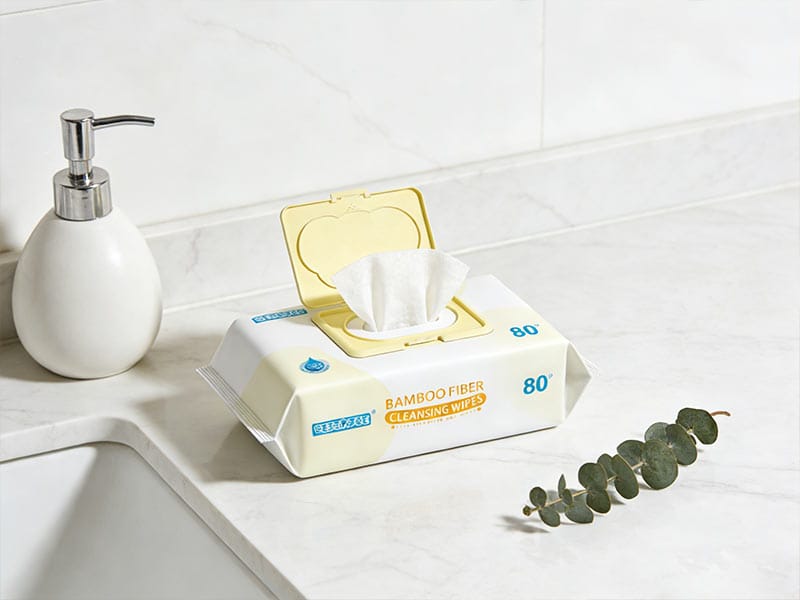
A development sample is normally produced in a much smaller quantity than a commercial production run. Mass production introduces variables related to raw materials, equipment settings, packaging materials, production speed, and batch management.
That does not mean mass production will necessarily be worse. It means buyers should establish controls that ensure the approved sample can be translated into repeatable production specifications.
Raw Material Variation
Nonwoven materials may differ according to composition, basis weight, manufacturing process, supplier, and specification.
If the approved sample uses one material and mass production substitutes another without buyer approval, the finished wipe can feel or perform differently.
Material specification should therefore be confirmed rather than relying only on visual appearance.
Formula and Liquid Loading
Two wipes made with the same fabric can provide noticeably different user experiences if their liquid loading differs.
For this reason, wet wipes quality control should address both the wipe substrate and the liquid system.
Packaging Differences
Packaging can also change the perceived quality of the finished product.
Seal integrity, dispensing performance, closure quality, printing accuracy, and package dimensions can all affect the commercial result even when the wipe itself meets specification.
What Should Be Included in a Wet Wipes Quality Control Checklist?
There is no single checklist that applies to every type of wet wipe. Baby wipes, personal care wipes, household cleaning wipes, and other categories can have different specifications and regulatory requirements.
However, B2B buyers can organize wet wipes quality control around several major areas.
| Inspection Area | What Buyers May Check | Why It Matters |
|---|---|---|
| Raw Material | Material type, agreed specification, appearance | Helps maintain wipe consistency |
| Wipe Dimensions | Length and width | Confirms approved product format |
| Sheet Count | Wipes per pack | Prevents pack-count discrepancies |
| Liquid Loading | Agreed moisture or liquid specification | Affects product experience |
| Formula | Approved formulation or ingredient specification | Prevents unauthorized changes |
| Appearance | Color, visible contamination, physical defects | Basic finished-product quality |
| Packaging Seal | Seal condition and leakage | Protects the product during storage and transport |
| Closure | Label or lid function | Helps reduce moisture loss after opening |
| Printing | Artwork, text, barcode, batch information | Prevents packaging and market errors |
| Carton | Quantity, markings, carton condition | Supports warehousing and logistics |
| Batch Records | Lot identification and production records | Supports traceability |
The final inspection criteria should be based on the actual product specification and target market rather than copied blindly from another project.
How Should Buyers Evaluate Wet Wipe Material?
The substrate is a major component of the finished product and deserves more attention than simply asking whether the wipe is “soft.”
Confirm the Material Specification
Ask the manufacturer what material is being quoted and make sure the same specification is referenced during sample approval and mass production.
If sustainability claims are important to the brand, the buyer should also request documentation appropriate to the particular material or claim rather than assuming that a plant-derived material automatically supports every environmental marketing statement.
Check Wipe Dimensions
Sheet size is straightforward to verify and should be included in the approved specification.
Even relatively small dimensional differences can matter when a brand has designed its packaging and marketing around a particular wipe size.
Evaluate Strength for the Intended Application
A wipe should be evaluated according to how it will actually be used.
A personal cleansing wipe and a household cleaning wipe do not necessarily need the same tactile properties or mechanical performance.
Instead of asking for the “strongest” material, buyers should define what performance is appropriate for the application.
How Should Liquid Loading Be Controlled?
Moisture is one of the most noticeable characteristics of wet wipes.
A pack that is significantly drier than the approved sample can create a poor user experience. Excess liquid can also create undesirable handling or packaging issues depending on the product.
Establish an Agreed Target
Buyers should discuss how liquid loading is specified and controlled by the manufacturer.
Rather than using subjective descriptions such as “very wet,” establish an agreed specification that can be checked during production.
Consider Distribution Through the Pack
It is also useful to consider whether the liquid is distributed appropriately throughout the pack.
This can be particularly relevant to larger packs where consumers expect a reasonably consistent experience from the first sheet to the last.
How Should Private Label Buyers Control the Formula?
Formula management becomes particularly important when a private label brand has approved a specific ingredient system.
Approve the Formula Before Mass Production
The buyer and manufacturer should agree on the formulation before production begins.
Changes to ingredients should not be made casually after sample approval, especially where they could affect product claims, labeling, regulatory status, stability, or user experience.
Match the Formula to the Intended Product
Different wet wipes can fall under different regulatory frameworks depending on their intended use, formulation, claims, and target market.
A baby cleansing wipe, cosmetic cleansing wipe, household cleaning wipe, and product making antimicrobial claims should not automatically be treated as equivalent from a compliance perspective.
This is why B2B buyers should define the product’s intended use and target market early in development.
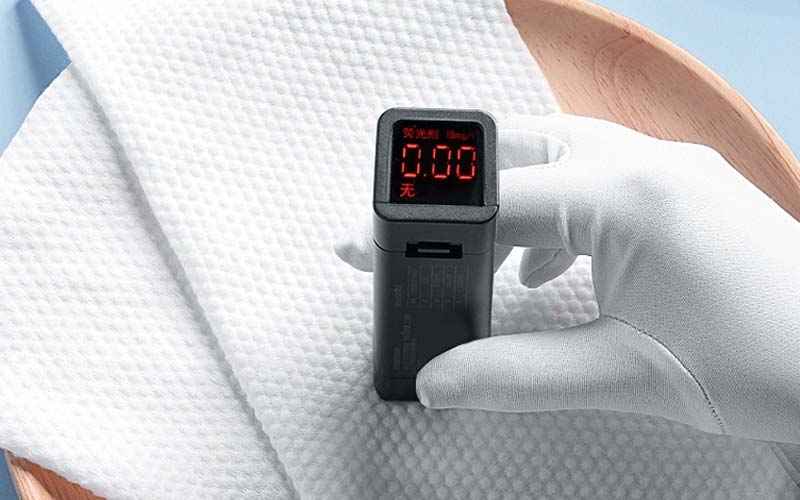
What Packaging Quality Problems Should Buyers Check?
Packaging deserves its own section in a wet wipes quality control plan because a good wipe inside a poor package is still a poor finished product.
Seal Integrity
The primary package needs to remain properly sealed during storage, handling, and transportation.
Buyers should discuss the manufacturer’s seal inspection process and how packaging defects are identified.
Resealable Label or Lid Performance
For multi-use packs, the closure affects the consumer experience after opening.
A resealable label that does not adhere properly or a lid that does not close correctly may contribute to moisture loss.
Printing Accuracy
Private label projects introduce another potential source of error: custom artwork.
Before mass production, verify:
- Brand name
- Product name
- Net contents
- Directions
- Required warnings
- Ingredient information where applicable
- Barcode
- Country-specific information
- Artwork version
The exact labeling requirements depend on the product and market, so buyers should verify applicable regulatory requirements rather than relying solely on a generic template.
How Can Buyers Check Batch Consistency?
For B2B sourcing, a good first shipment is not enough. A manufacturer should be able to maintain the agreed specifications across repeat orders.
That makes batch consistency a central part of wet wipes quality control.
Keep an Approved Reference
An approved reference sample or documented specification provides a comparison point for future production.
If a repeat order feels noticeably different, the buyer and manufacturer can refer back to the agreed standard instead of debating subjective expectations.
Control Changes
If a raw material, formula, packaging component, or other important specification needs to change, there should be a process for communicating and approving that change.
This is particularly important for established private label products because even seemingly minor changes can affect customer experience or packaging claims.
Maintain Lot Identification
Batch or lot identification helps manufacturers and buyers trace production if a problem is discovered later.
Traceability is particularly valuable when a distributor handles multiple shipments or supplies several customers.
What Should Buyers Inspect Before Shipment?
Pre-shipment inspection allows the buyer to identify obvious discrepancies before the goods enter international logistics.
The exact inspection plan should reflect the purchase specification and risk profile of the product.
Product Specification
Verify that the finished product corresponds with the approved specifications for material, dimensions, count, formula, and packaging.
Packaging Appearance
Inspect printing, pack condition, closures, and obvious sealing defects.
Carton Information
Confirm carton markings, quantities, and other agreed shipping information.
Documentation
Check whether the documents required for the specific order and destination are available.
This is particularly important for regulated products or markets where the importer must maintain specific records.
What Documents Should B2B Buyers Request?
The required documents depend on the product, claims, destination, and commercial agreement.
There is no universal document package suitable for every wet wipes order.
Depending on the project, buyers may need to discuss items such as:
- Product specification
- Ingredient information
- Safety-related documentation where applicable
- Quality records
- Batch information
- Relevant test reports
- Manufacturing certifications
- Packaging specifications
- Commercial and shipping documents
Buyers should determine the applicable regulatory requirements for their target market rather than treating a certificate from another market as automatic proof of compliance.
How Should Buyers Evaluate a Manufacturer’s Quality System?
Asking “Do you have quality control?” usually produces a yes-or-no answer with little practical value.
More useful questions examine how the system actually works.
Ask About Incoming Material Inspection
How are nonwoven materials, packaging, and other incoming components checked before they enter production?
Ask About In-Process Controls
What parameters are monitored while wet wipes are being produced?
Ask About Finished Product Inspection
How does the manufacturer determine whether a production batch meets the agreed specification?
Ask About Non-Conforming Products
What happens when a defect or specification deviation is found?
Ask About Traceability
Can the manufacturer identify the production lot and relevant records for a finished shipment?
Answers to these questions provide more useful information than simply collecting a list of certificate logos.
Should You Use Third-Party Inspection for Wet Wipes?
Third-party inspection can be useful in some sourcing situations, but it is not automatically necessary for every order.
The decision depends on factors such as order value, supplier history, product risk, customization complexity, and the buyer’s own quality management resources.
When Additional Inspection May Be Useful
A buyer may consider independent inspection when working with a new supplier, placing a particularly important order, introducing complicated custom packaging, or purchasing a product where specification errors would be costly.
Manufacturer QC Still Matters
Third-party inspection should not replace factory quality control.
An external inspector normally examines a sample of finished goods according to an agreed inspection plan. The manufacturer’s own quality system operates throughout production and therefore serves a different function.
What Should Be Included in an OEM Wet Wipes Purchase Specification?
One of the best ways to reduce quality disputes is to make the purchase specification sufficiently detailed before production.
A useful specification may cover:
Wipe
Material, dimensions, fold, and other agreed physical characteristics.
Liquid
Approved formula and agreed liquid-related specifications.
Pack
Sheet count, packaging material, closure, dimensions, and artwork.
Carton
Units per carton, carton markings, and agreed packing configuration.
Quality Requirements
Inspection criteria, tolerances where applicable, documentation, and approval procedures.
Change Control
Define whether important changes require buyer approval.
This creates a much stronger foundation than relying on messages scattered across emails or chat conversations.
How Can Buyers Reduce Quality Problems With a New Supplier?
A systematic qualification process is generally more effective than trying to solve problems after production.
Begin With Clear Requirements
Tell the manufacturer exactly what you need rather than asking them to guess your market positioning.
Compare Samples Against Specifications
Do not approve a sample only because it “looks good.” Record what exactly has been approved.
Confirm Packaging Before Printing
Packaging mistakes can be expensive to correct after mass printing.
Confirm the Production Standard
Make sure the factory knows which sample, formula, artwork, and specification constitute the approved version.
Inspect Before Shipping When Appropriate
Depending on the order, final inspection can provide another control point before goods leave the factory.
Red Flags B2B Buyers Should Watch For
Quality problems are sometimes visible before an order is placed.
A manufacturer that cannot clearly explain product specifications, refuses to provide reasonable documentation, changes important product details without explanation, or provides inconsistent answers may require additional due diligence.
Similarly, extremely low quotations should be examined carefully rather than automatically treated as a purchasing advantage.
The question should be what materials, specifications, services, and quality controls are included in the quotation.
Comparing equivalent specifications produces a more meaningful supplier comparison than comparing unit price alone.
FAQ
What should be checked during wet wipes quality control?
Buyers may need to check material specifications, wipe dimensions, sheet count, formula, liquid loading, packaging seals, printing, carton configuration, and batch identification depending on the product.
How can I make sure mass production matches my approved sample?
Document the approved specifications, maintain a reference sample where appropriate, confirm the production standard before manufacturing, and establish inspection requirements.
Should I inspect wet wipes before shipment?
Pre-shipment inspection can be useful, particularly for new suppliers or customized orders. The appropriate inspection level depends on the project’s risk and requirements.
Why is packaging inspection important for wet wipes?
Packaging helps maintain product condition and affects dispensing, moisture retention, branding, logistics, and customer experience.
What should I ask an OEM wet wipes manufacturer about quality control?
Ask how incoming materials, production processes, finished goods, non-conforming products, specification changes, and batch traceability are managed.
Conclusion
Wet wipes quality control should be treated as a complete process rather than a final inspection performed after production. For B2B buyers, the most effective approach begins with clear specifications, an approved product standard, appropriate material and formula controls, packaging verification, batch traceability, and defined inspection requirements.
Importers, distributors, retailers, and private label brands should pay particular attention to the transition from sample development to mass production. A visually acceptable sample does not by itself define every requirement needed for consistent repeat orders.
Before confirming an OEM wet wipes order, buyers should therefore establish what will be produced, how conformity will be evaluated, what documentation is required, and how future changes will be controlled. This makes supplier communication clearer, reduces preventable disputes, and creates a stronger foundation for long-term wet wipes sourcing.