If you are planning to launch a private label wipes product, one of the first questions to ask a manufacturer is the minimum order quantity, or MOQ.
For many new brands, MOQ directly affects how much inventory they need to purchase before they know how the market will respond. A high MOQ can tie up cash and increase inventory pressure, while a practical MOQ gives a new product more room to test the market.
At Beierjie, the minimum order quantity for wet wipes starts from 1,000 packs, making private label wipes production more accessible for new brands, distributors, retailers, and businesses testing a new product idea.
But what determines wet wipes MOQ, and why can the minimum quantity differ between products?
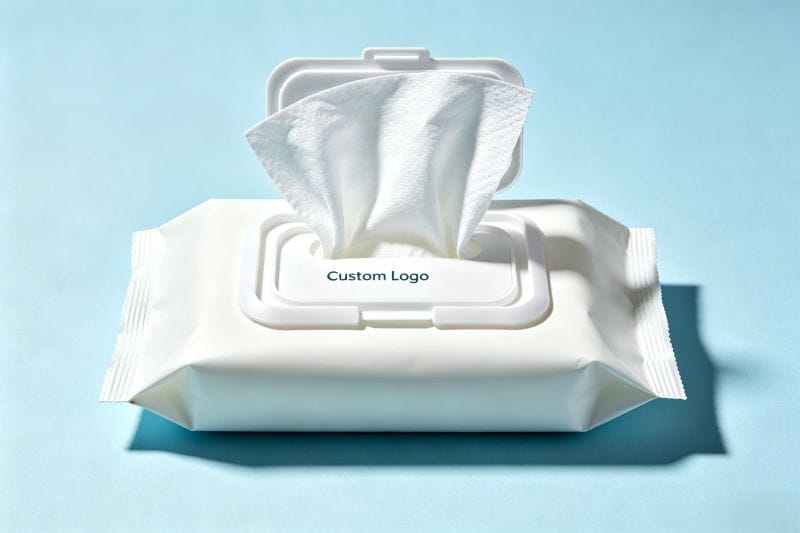
Table of Contents
What Does MOQ Mean for Wet Wipes?
MOQ stands for Minimum Order Quantity. It is the smallest quantity a manufacturer will produce for a particular product or specification.
For wet wipes, MOQ is usually discussed in terms of finished packs, although the exact calculation can depend on the manufacturer’s production process and the product being ordered.
For example, a buyer may request:
- 1,000 packs of baby wipes
- 5,000 packs of facial cleansing wipes
- 10,000 packs of household cleaning wipes
The actual quotation and production requirements will depend on the product specifications.
The important point is that MOQ is not simply a number chosen at random. It is closely related to the materials, formulation, packaging, production setup, and customization required for the order.
Why Does Wet Wipes MOQ Matter to New Brands?
MOQ is especially important when launching a new brand because your first order is often based on an estimate rather than proven sales data.
You may have a strong product concept, but you do not yet know:
- How quickly customers will reorder
- Which product size will sell best
- Which packaging customers prefer
- How much inventory you can realistically store
- How long it will take to sell through the first batch
This is why a lower MOQ can be useful during the early stage of a brand.
With a 1,000-pack minimum, a business can start with a more manageable quantity, collect real customer feedback, and use sales performance to guide future production.
Once demand becomes more predictable, larger production runs can be considered.
Why Is Beierjie’s MOQ 1,000 Packs?
Beierjie has set its minimum order quantity at 1,000 packs to support businesses that need customized wipes without requiring an excessively large initial order.
This can be particularly useful for:
New brands that want to test a product before scaling.
Distributors that want to introduce a new wipes category to their market.
Retailers developing private label products.
E-commerce businesses testing demand through online sales.
Established brands launching a new product or packaging variation.
The actual production details still need to be confirmed based on the selected product, material, formula, packaging, and other specifications.
You can explore Beierjie’s wet wipes product range to see the different personal care and household cleaning applications available for product development.
What Factors Affect Wet Wipes MOQ?
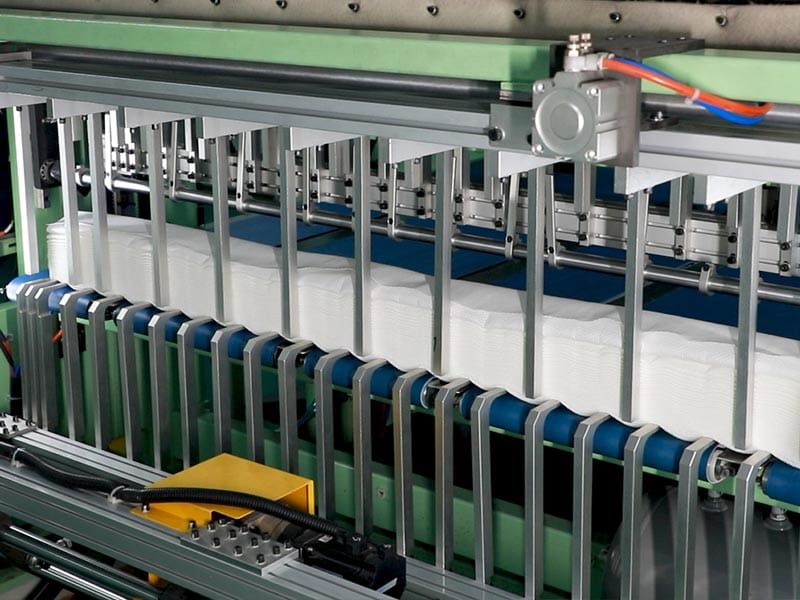
Although Beierjie’s minimum order quantity starts from 1,000 packs, individual projects can have different production requirements.
Several factors need to be considered when developing a custom wipes product.
Packaging
Packaging is one of the biggest factors to consider.
A standard soft pack and a fully customized package can require different production arrangements.
Custom packaging may involve new printed film, artwork, lids, labels, special dimensions, or other components.
If you are launching your first product, keeping the packaging structure relatively simple can make the initial project easier to manage.
Once the product has established market demand, you can introduce additional packaging formats or SKUs.
Wipe Material
The substrate also affects the production specification.
Different applications may require different combinations of softness, absorbency, strength, thickness, and texture.
A baby wipe, facial cleansing wipe, and household cleaning wipe do not necessarily need the same substrate.
For example, Beierjie’s Baby Cleansing Wipes are designed for personal care applications, where softness and the overall skin-contact experience are important considerations.
For household applications, material strength and liquid retention may have greater importance.
Formula
The liquid formulation can also influence the complexity of a private label project.
A brand may choose an existing formulation or request a customized formula depending on the product’s intended application.
Common considerations include fragrance, moisture level, cleansing performance, pH, functional ingredients, and preservative systems.
The formula should also work properly with the selected wipe material and packaging.
For products marketed in the United States, product claims should be considered carefully. The U.S. Food and Drug Administration explains that disposable wipes can fall under different regulatory categories depending on their intended use.
Number of SKUs
MOQ becomes more complicated when a brand wants to launch several products at the same time.
Suppose a company wants to launch:
| Product | Pack quantity |
|---|---|
| Baby wipes | 1,000 packs |
| Facial cleansing wipes | 1,000 packs |
| Household cleaning wipes | 1,000 packs |
The total order would be 3,000 packs, but the three products may require different materials, formulas, packaging, and production settings.
This is why it is important to discuss the MOQ for each individual SKU rather than looking only at the total number of packs.
Is 1,000 Packs a Good MOQ for a New Wipes Brand?
For many new brands, 1,000 packs can provide a practical starting point.
The ideal starting quantity depends on your expected sales, available budget, storage capacity, and sales channel.
Consider a new e-commerce brand launching its first baby wipes product.
If the business orders a very large quantity before testing the market, a slower-than-expected launch could leave a significant amount of capital tied up in inventory.
Starting with 1,000 packs allows the business to test:
Customer response
Product reviews
Repeat purchase behavior
Packaging performance
Sales channels
Actual monthly demand
The results can then be used to determine the next production quantity.
This does not mean that a smaller MOQ is always better. If you already have strong distribution channels or established demand, a larger order may provide better production economics.
The right MOQ depends on the stage of your business.
Does a Lower MOQ Mean a Higher Unit Cost?
Not necessarily, but order quantity can influence production economics.
Manufacturing involves costs associated with materials, production setup, packaging, printing, labor, quality control, and other processes.
When the production quantity increases, some costs can be spread across more finished units.
This means a larger order may offer a lower unit cost.
However, a lower unit cost does not automatically mean a better business decision.
For a new product, you should consider both unit cost and inventory risk.
| Production approach | Main advantage | Main consideration |
|---|---|---|
| Smaller order | Lower initial inventory investment | Unit cost may be higher |
| Larger order | Potentially better production economics | More capital tied up in inventory |
| Test order | Useful for validating demand | May require a second production run sooner |
| Large-scale production | Suitable for established demand | Higher upfront commitment |
A practical MOQ allows you to balance these factors.
How Should You Choose Your First Order Quantity?
Start with your expected sales rather than choosing a quantity simply because it sounds attractive.
Suppose you expect to sell around 300 packs per month.
An initial order of 1,000 packs would represent roughly three months of projected sales, before considering safety stock, lead time, and changes in actual demand.
If you expect to sell 3,000 packs per month, the same 1,000-pack order would provide much less inventory coverage.
This simple calculation can help you determine whether the minimum order is enough for your launch.
Before placing an order, consider:
| Question | Why it matters |
|---|---|
| How many packs can you sell monthly? | Helps estimate inventory needs |
| How much storage do you have? | Prevents unnecessary inventory pressure |
| How much cash can you allocate? | Protects working capital |
| How quickly can you reorder? | Helps prevent stockouts |
| How many SKUs are you launching? | Determines how inventory is distributed |
| Is demand already proven? | Helps determine whether a larger order is justified |
Can You Order Different Products Together?
This depends on the manufacturer’s production arrangements and the specifications of each product.
Different wipes may require different raw materials, formulas, packaging, or machine settings.
For example, Household Cleaning Wipes designed for kitchen cleaning have different performance requirements from baby cleansing wipes.
If you are considering several products, provide the manufacturer with your planned SKU list and estimated quantity for each product.
The manufacturer can then determine the most practical production arrangement.
What Should You Ask a Wet Wipes Manufacturer?
Instead of asking only “What is your MOQ?”, provide enough information for the manufacturer to understand the project.
A useful inquiry should include:
| Information | Example |
|---|---|
| Product type | Baby wipes |
| Application | Daily cleansing |
| Material | Spunlace / preferred material |
| Sheet size | Target dimensions |
| Pack count | 60 / 80 / 100 sheets |
| Formula | Fragrance-free / customized |
| Packaging | Soft pack / lid pack |
| Quantity | 1,000 packs or more |
| Target market | United States / Europe / other |
| Custom artwork | Yes / No |
If you are not sure about the material, formula, or exact sheet size, you do not need to solve everything before contacting a manufacturer.
A professional supplier should be able to recommend suitable specifications based on your application and target market.
What Happens After You Meet the MOQ?
Meeting the MOQ is only the beginning of the production process.
Before mass production, you should confirm the product specification and approve the sample.
This normally includes:
Product specification → Sample → Sample evaluation → Artwork approval → Production → Quality inspection → Shipment
During sample evaluation, pay attention to the wipe’s softness, strength, thickness, moisture level, fragrance, liquid distribution, packaging, and dispensing performance.
Once the sample has been approved, the final production should follow the agreed specifications.
This is especially important if you plan to reorder the same product later.
How Can New Brands Avoid MOQ Problems?
The easiest way to avoid MOQ problems is to define your product requirements before requesting quotations.
Do not send a manufacturer only a brand name and ask for a price.
Instead, provide as much information as possible about:
- Product application
- Target customer
- Target market
- Sheet size
- Number of wipes per pack
- Material preference
- Formula requirements
- Packaging
- Estimated quantity
This allows the manufacturer to evaluate the project based on actual requirements.
It also makes supplier comparisons more meaningful because you are comparing similar specifications rather than comparing unrelated quotations.
MOQ Is Only One Part of Supplier Selection
A manufacturer offering a low MOQ may look attractive, but MOQ should not be the only factor you consider.
You should also evaluate:
- Product quality
- Manufacturing capability
- Material options
- Formula development
- Packaging customization
- Quality control
- Production capacity
- Communication
- Documentation
- Lead time
A reliable manufacturer should be able to support your product after the first order as well.
If the first 1,000 packs sell successfully, you need a supplier capable of producing the next order with consistent specifications.
For a broader overview of the development process, see our guide on how to start a private label wipes brand.
Final Thoughts
MOQ is an important consideration when launching private label wipes, but the lowest possible quantity is not always the most important goal.
For new brands, a 1,000-pack minimum order quantity can provide a practical way to test a product, collect customer feedback, and build sales data without committing to excessive inventory from the beginning.
The right order quantity ultimately depends on your product specifications, expected demand, budget, number of SKUs, and long-term sales plan.
If you are developing a new private label wipes product, start by defining the product type, material, formula, packaging, target market, and estimated quantity. Then discuss those requirements with a manufacturer to determine the most suitable production solution.
With a minimum order quantity starting from 1,000 packs, Beierjie supports businesses looking to develop and launch private label wipes with a manageable initial production volume. Contact Beierjie to discuss your product requirements and request a quotation.